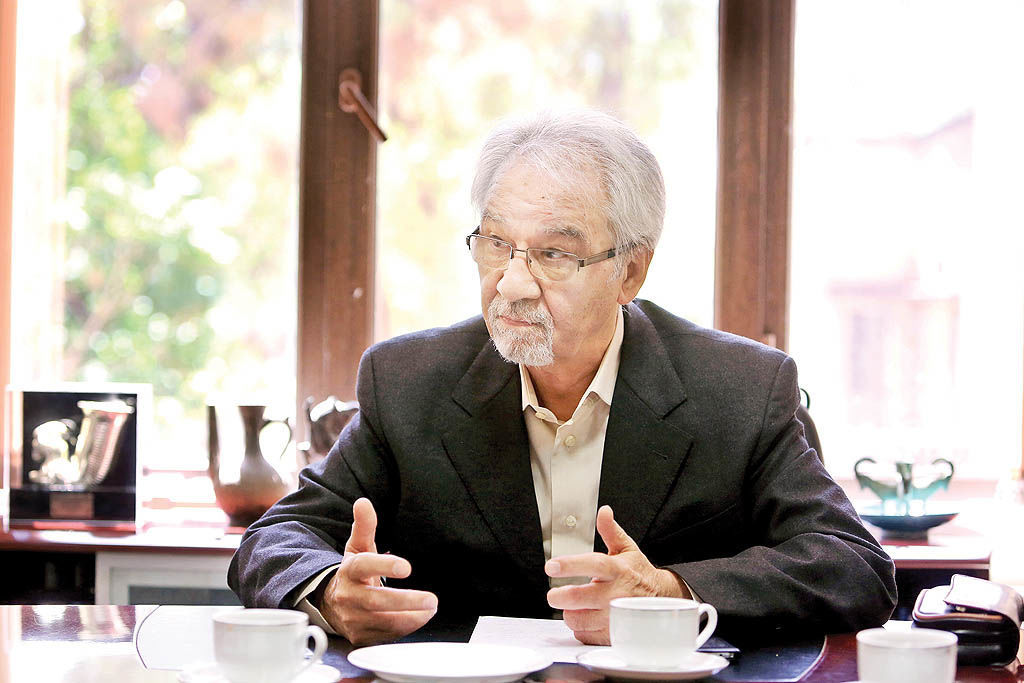
Mohammad Mehdi Behkish, an economist, in an interview with Eghtesad News, examining Europe's economic challenges and comparing the development models of the United States, Europe and China, pointed out that no complete economic model exists in the world and every economic system, alongside its advantages, faces limitations. In his belief, Europe's economy faces an investment crisis and a decline in technological competitiveness, but this situation does not mean the complete failure of the welfare state model. The main issue is the inability to create a balance between social costs, productive investment and economic growth. He emphasized that Iran too, in order to exit stagnation and achieve sustainable growth, must reconsider how it allocates resources and pave the way for private sector activity and broader investment.
Behkish, in explaining the differences between the world's economic models, says the American economy is based on economic dynamism, extensive investment and technology development. The heavy investments of past years, especially in the field of technology, have caused this country to obtain a prominent position in the global economy and advanced industries. Nevertheless, one of the most important problems of the American economy is the severe inequality in income distribution. In this model, great opportunities exist for creating wealth and economic activity, but the benefits derived from economic growth are not distributed in a balanced way among different groups of society. In contrast, the European welfare state model emphasizes providing extensive public services, especially in the fields of health and education, and reducing income inequalities. European governments, by receiving heavy taxes from households and firms, finance a considerable part of the costs of these services. These policies have helped expand general welfare and improve income distribution, but from Behkish's viewpoint, the government's high costs can limit the resources necessary for investment. When a large part of income is spent on current expenditures and social services, fewer resources remain for developing productive activities, increasing production capacity and technological progress.
In this economist's belief, one of the main reasons for the decline in Europe's economic growth is the drop in investment at the level of households and firms. High tax rates have reduced the incentive to invest and have paved the way for capital to move to countries such as the United States — a country where, according to him, there are lower taxes and more investment opportunities. Heavy taxes have also reduced household savings and limited the ability to provide financial resources for investment. The consequence of this process is Europe falling behind its rivals in some fields of technology. Behkish believes the main competition in the field of advanced technology, especially in the field of artificial intelligence, is flowing more than before between the United States and China, and Europe has found a weaker position in this competition. Nevertheless, Behkish emphasized that the welfare state has not failed. European countries still have important capacities in the fields of public services, quality of life and social support, but to maintain the sustainability of this model they must carry out reforms. In his view, reducing part of public expenditures and handing over some activities to the private sector, especially in the field of educating the well-off classes, can reduce the pressure on the government budget. Alongside these measures, reforming the tax system is also necessary, so that the possibility of more saving is provided for households and firms and the incentive to invest increases. Of course, such reforms will face social opposition, because an important part of European citizens benefit from extensive public services and consider a reduction of these services a threat to their level of welfare.
Another part of Europe's economic problems relates to the increase in military expenditures. According to Behkish, American pressures within the NATO framework to increase defense budgets, especially in countries such as Germany and France, have raised government costs. Concern about the probability of a conflict with Russia has also driven European governments to increase military spending. These costs are imposed on the public budget under conditions where governments simultaneously face budget deficits, rising borrowing costs and heavy debts. He also pointed to the historical developments of Europe's economy. European countries in the past, through colonization and presence in various regions of the world, had access to raw materials and extensive sales markets. With the independence of the colonies in the twentieth and twenty-first centuries, the possibility of directly benefiting from these resources decreased. In his belief, the loss of this historical advantage, alongside the increase in domestic and military costs, has placed additional pressure on the welfare state model and has increased the necessity of reconsidering the economic structure of European countries.
Behkish, in examining Europe's political developments, believes that neither the left parties nor the far-right currents have a complete solution for solving this continent's economic problems. Left currents usually emphasize expanding the government's responsibilities and supporting migrants, while far-right parties demand severe restrictions on immigration. Nevertheless, according to him, a complete halt to immigration faces not only human rights and humanitarian obstacles, but is also incompatible with Europe's need for human resources. European countries at various levels face labor shortages and cannot completely restrict their immigration policies without regard to this issue. On the other hand, Behkish believes that America's economic conditions, more job opportunities and continuous investment in technology attract elites to this country. In contrast, part of Europe's specialized human resources migrate to America. He considers this process a sign of the relative weakness of Europe's economic dynamism. Also, differences in energy policies, including Europe's environmental restrictions on the use of fossil fuels, compared with the broader access to and consumption of these fuels in America, are among the other factors affecting the difference between the two regions' economic structures.
In his belief, the far right does not offer a logical and sustainable solution for managing Europe's economy, and the continuation of this current's policies can intensify political and social instability. On the other hand, the uninterrupted expansion of government expenditures will not solve the investment problems either. Therefore, the main solution must be pursued through economic reforms within the framework of the centrist currents — reforms that improve the tax system, economic incentives and investment conditions while at the same time preserving support for the needy classes. In Behkish's view, the goal must be to create a model that both encourages investment and wealth creation and provides the possibility of benefiting from suitable services and job opportunities for low-income groups.
This economist, continuing, considered China's experience important for examining Iran's development path. In his belief, China in the early stages of development gave greater priority to investment and, compared with European countries, allocated fewer resources to welfare services. Iran too, in the past four decades, has allocated extensive resources to the military and welfare fields, but has not paid sufficient attention to productive investment and wealth creation. In his view, the extensive allocation of resources to subsidies, rents and programs that pave the way for corruption, without creating a suitable platform for production, cannot lead to sustainable growth. Weak laws and the spread of corruption also reduce the resources usable for investment. He emphasized that the problems of Iran's economy are not limited to war, and even in the absence of war, the country's economic structure has faced serious difficulties. In the end, Behkish highlighted three factors in China's development experience: increasing the economy's competitiveness, preserving and expanding international relations, and providing space for the private sector to operate. In his view, China was able, during the period of expanding investment, to make its economy more competitive, keep foreign relations as far as possible from political hostilities, and give the private sector more opportunity to operate. These factors helped attract capital, develop technology and increase production capacity. From this perspective, the suitable path for Iran is not the complete imitation of a foreign model, but the selection of a compatible combination of global experiences, with emphasis on competitiveness, international relations, reforming the tax structure and strengthening productive investment.
Source: Donya-e-Eqtesad