Securing Financial Resources Is the Condition for Realizing the Rail Goals of the Seventh Plan
The deputy head of the Railways said: Fuel consumption in rail transport is one-sixth of road transport, and the development of suburban trains was pursued by the President himself with the aim of reducing the traffic of the metropolises, even during the war.
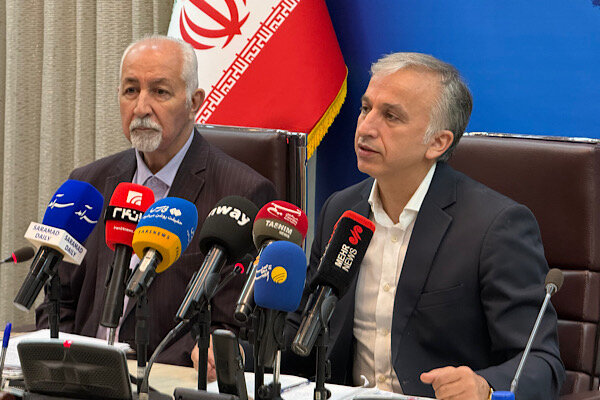

The deputy head of the Railways said: Fuel consumption in rail transport is one-sixth of road transport, and the development of suburban trains was pursued by the President himself with the aim of reducing the traffic of the metropolises, even during the war.
According to the Mehr reporter, Seyed Mirhassan Mousavi Dizaji, deputy head of the Railways of the Islamic Republic of Iran, today (Sunday, October 25) at the press meeting of the 19th International Rail Transport Conference, referring to the necessity of developing rail transport in the country, stated: Alongside the operational activities, the senior managers of the Railways also have on their agenda the pursuit of study, consultancy and other matters related to development; but the generation of ideas and the raising of scientific issues must be done by the universities, the elites, the veterans and all those interested in the development of the country's transport, especially rail transport, so that these ideas are turned into the related laws, regulations and facilities and the operational managers can implement them properly.
He added: Rail transport in our country, especially in the present conditions and also in the past, has enjoyed considerable advantages compared with the other modes of transport, which cannot simply be passed over. Perhaps we have not been able to publicize these advantages well and to establish the importance of this sector as it deserves. Also, in the past few years, serious attention has not been paid to this field.
Fuel Consumption in Rail Transport Is One-Sixth of Road Transport
The deputy head of the Railways of the Islamic Republic of Iran, referring to the advantages of rail transport, stated: One of the greatest advantages of rail transport is the reduction of fuel consumption, which today counts as one of the country's important issues. In the rail transport of freight and passengers, approximately one-sixth of the fuel consumed in road transport is consumed for moving freight and passengers from origin to destination.
He recalled: The reduction of air pollution and the development of green transport are among the other advantages of rail transport. Also, the development of this mode of transport in the passenger sector can lead to a reduction of road accidents and to preventing the death of compatriots or their injury and disability; a matter that, given the high volume of travel by private cars on the country's roads, has great importance.
Mousavi Dizaji continued: The mass movement of freight by rail is also another important advantage. By forming a train from origin to destination and covering long distances, the movement of a large number of trailers on the country's road routes can be prevented or reduced, so that fewer dangers face the passengers who travel on the roads. Comfort and safety are also among the other advantages of rail transport.
He emphasized: Because of these very advantages, the various countries of the world have always paid, and will pay, serious attention to the development of rail transport in the passenger and freight sectors. In these countries, suitable regulations have been drawn up, good facilities have been considered, and governments have also provided considerable support to this sector.
The deputy head of the Railways, referring to the attention of the government and the parliament to the development of rail transport, said: If we pay attention to the President's speeches over the past year, his serious presence at railway visits and the holding of rail-transport development meetings at intervals of at most two weeks show that the government and the parliament have put the development of this sector on their agenda.
He added: Attention to the emphases of our martyred Imam about the development of rail transport also has special importance, given the country's position on the North-South and East-West corridors and Iran's being situated at the crossroads of international communications and on the route connecting Asia to Europe.
Mousavi Dizaji, referring to the capacities of the Seventh Development Plan law in the field of rail transport, stated: The effects and requirements of the development of this sector have been fully seen in the Seventh Development Plan law that the Islamic Consultative Assembly approved. The government and the parliament must pursue the implementation of these obligations, foresee the financial resources needed and provide the necessary facilities for the entry of investors, so that we can draw close to the goals set in this law.
The Development of Suburban Trains Was Pursued Even During the War
He recalled: The President, even during the war, holds detailed meetings for the development of suburban trains. The two main matters emphasized by him in the field of transport: one is the development of suburban trains, which is pursued with the aim of reducing the inbound traffic to the metropolises.
The deputy head of the Railways stated: Usually, people who travel to the metropolises for work and return to their own cities after the work ends face one to two hours of traffic on the inbound route and one to two hours of traffic on the outbound route. These conditions bring in their wake the fatigue of work and of the route, energy consumption and other related matters; therefore, the development of suburban trains has been placed on the agenda.
He added: We have created the Suburban Trains Company in accordance with the law and the related regulations and, with strength and speed, on the basis of the President's guidance, we are pursuing this matter so that we can play an effective role in moving the people who come to the metropolises for work, education and possibly treatment, and return them immediately to their cities of residence so that they can attend to their rest and their lives.
Mousavi stated: The development of suburban trains has been attended to both in the Seventh Development Plan law, and the President has a serious emphasis on it.
He, emphasizing the necessity of making use of scientific capacities and international experiences in the development of rail transport, said: Generating ideas about these matters, carrying out the scientific studies related to innovations and the comparative reviews for achieving the set goals, with the participation of domestic and foreign consultants, requires the holding of international conferences. Through this, we can benefit from the experiences of other countries, the elites, the academics and the people who have studied in this field, written scientific works or have practical experience.
The Movement of Freight and Passenger Trains in the 12-Day War Did Not Stop Even for One Day
The deputy head of the Railways, referring to the performance of the Railways in the fourteenth government and the country's special conditions, stated: In the nearly two years of the fourteenth government's activity in the railway sector, given the country's conditions in the 12-day war, the state of neither war nor peace, and also the 40-day war and the events surrounding it, our colleagues in the passenger and freight transport companies have had a positive performance.
He, referring to the performance of the Railways in the 12-day war, said: The experiences that had been gained in the Railways over the past several years caused that not even for one day did the movement of passenger and freight trains on the rail network stop.
With the Halt of Flights, the Railways Launched Extraordinary Trains within a Few Hours
Mousavi recalled: After the attacks began and flights stopped, the Railways immediately entered the field. In those very first one or two hours, we planned for launching extraordinary trains, adding the reserve wagons available in the various regions and issuing permits for the use of wagons that were awaiting their annual overhaul.
He stated: These decisions were taken within one or two hours, and immediately all the facilities entered the field with a jihadi approach. In the first days of the war and also in its final days, when the demand for travel increased markedly, we were able to manage the movement of passengers from holy Mashhad, Bandar Abbas, Tabriz, Tehran and other cities to various destinations.
The deputy head of the Railways, referring to the performance of the Railways in the Arbaeen days, stated: In the passenger sector and in the Arbaeen days too, we were able to perform our duty for moving the lovers of the Ahl al-Bayt (AS) who intended to visit Imam Hussein (AS). From various cities, we launched direct trains to the destination of Khorramshahr, and four railbus units were stationed in Khorramshahr, Shalamcheh and the Ahvaz-to-Khorramshahr station, which operated around the clock.
He added: Also, for the Kermanshah and Hamadan routes, we planned extraordinary round-trip trains. Given the connection of the rail network to the south of the country, we were able to answer the people's demand for travel, and there was no day on which a demand existed but the possibility of answering it was not provided.
Percent of the Trains' Capacity Was Allocated to the Funeral Ceremonies in Tehran, Qom and Mashhad
Mousavi, referring to the role of the Railways in moving the participants in the farewell and funeral ceremonies of the martyred Imam in Tehran and Qom, stated: In these ceremonies, we immediately planned 80 percent of the capacity of all passenger trains and placed it at the disposal of those eager to attend the ceremony. This capacity was allocated for moving passengers from various cities to Tehran and also from Tehran to Qom, and this operation was carried out successfully.
He, referring to the movement of passengers for the funeral and burial ceremony of the martyred Leader in Mashhad, stated: In this ceremony too, we planned 80 percent of the trains' capacity from all the cities connected to the rail network to the destination of holy Mashhad and on the return route.
The deputy head of the Railways continued: Although the enemy, with the aim of creating disruption, bombed one of the entrance bridges of the Mashhad railway station on this city's rail axis, by the grace of God we placed the reconstruction and re-establishment of the rail line on the agenda in those very first hours, and in less than 24 hours this line became operational.
He added: In the course of this event, in cooperation with the Road Maintenance Organization, we moved by bus the passengers who had been stopped in several blocks, and on the other side of the route too, trains had been foreseen so that the passengers would again be transferred by train to the Mashhad railway station and the city center and be able to attend the ceremony.
Mousavi, referring to the role of this organization in moving essential goods in wartime conditions, stated: In the 12-day war, the Railways was on the field around the clock for moving essential goods, especially from Imam Khomeini Port (RA). For some wagons that had fundamentally not been foreseen for travel on that route or for carrying that type of goods, special permits were issued. With the observance of the safety measures, we were able to carry out these missions without any incident or accident.
The Backwardness of Rail Transport Will Not Be Compensated by the Current Investments
He, emphasizing the necessity of developing rail transport, stated: The use of new technologies, artificial intelligence for transport management, the development of the rail fleet and the diversification of the financial-resource supply sources are among the matters about which ideas must be generated, articles written, discussions and reviews held and measures devised.
He added: Given the conditions in which the country finds itself, the government alone cannot supply all the financial resources needed for the development of rail transport; therefore, planning must also be done about how to use the people's resources and the other existing capacities for the development of this sector.
Mousavi, referring to the necessity of interaction with the non-governmental sector, said: In the fourteenth government and under the management of the current CEO of the Railways, maximum interaction has been established with all the guild and scientific associations, the transport companies, the forwarders and the carriers. Of course, a major part of these interactions has taken place in line with performing the operational and day-to-day duties.
He continued: With the participation of the activists of this field, several investment events in the infrastructure sector and the development of the fleet, including freight and passenger locomotives, have taken shape; but are these measures sufficient for the development of rail transport? The answer is negative, because these measures cannot compensate all the existing backwardness or cover all the obligations set in the Seventh Development Plan law.
The deputy head of the Railways stated: For this reason, the holding of conferences of this kind is a necessity, so that the views of the governmental and non-governmental sectors, the academics and the activists of other countries are raised and international experiences are placed at one another's disposal. The goal is that we be able, at the least cost, to have the best use of the existing capacities.
The Damaged Mashhad Rail Line Became Operational in Less than 24 Hours
He, referring to the damage inflicted on the rail infrastructures in the course of the war, said: In this war, we were attacked from two directions, one of which was the targeting of the bridges. Nevertheless, by the grace of God and by using the existing capabilities, the equipment we had foreseen beforehand and the measures taken, we were able in less than 48 hours to re-establish the rail network.
Mousavi recalled: In the freight sector too, some complexes, especially Khuzestan Steel and Mobarakeh Steel, were damaged. About 30 percent of the Railways' freight transport was allocated to these complexes, but we were able, by replacing them with other freights and managing the conditions, to run the rail network in the best possible way to this day.
He continued: At one point, due to the fluctuations, we lost about 30 percent of our freight, and after that, part of this decrease was compensated. We are still trying to compensate the whole of this amount, so that with the reconstruction of the damaged complexes, the possibility of resuming their freight transport is also provided.
The deputy head of the Railways in the end noted: The 19th International Rail Transport Conference will be held on November 10 and 11, 2026, and we hope that with the presence of the activists of this field, the ground will be provided for greater use of domestic and international experiences for the development of the country's rail transport.

Source: Mehr News Agency
Related stories
The Solution to Save Europe's Economy
Fruitless Money-Pouring for Employment