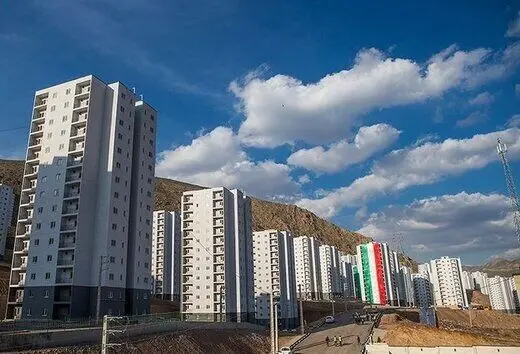
According to an ILNA reporter from Gorgan, one of the government's support measures for tenants was reducing the bank interest rate from 23 to 18 percent, which is assessed as a positive step in housing construction; but given the sharp rise in construction costs, this reduction has still not tangibly eased applicants' financial pressure. Many builders believe that real construction costs grow much faster than policy changes, and this has limited the effect of the decision.
Raising the construction loan ceiling from 650 to 850 million tomans is also a step forward, but given the current price of materials, this figure still falls considerably short of real construction costs. As a result, a significant part of the financial burden remains on households, and this increase in facilities covers only part of the existing gap.
At a time when rental costs and providing cash equity have put great pressure on Golestan households, a set of support policies is being implemented; but field studies show that in practice these policies face challenges. For example, although the housing deposit loan helps reduce the initial pressure, given the rapid growth of rents, many tenants consider it insufficient and believe these loans act more as a painkiller than a lasting solution.
In the construction sector, too, support packages such as interest-free loans of 200 and 400 million tomans have been defined for semi-finished projects. However, the process of receiving these facilities, administrative complexities and the time-consuming review stages have meant that some builders cannot benefit from these supports at the appropriate time; an issue that itself fuels delays in completing projects.
The plan of land allocation and construction in the form of group building is also among the programs that can help applicants directly manage projects. But past experience has shown that the success of this model depends on the groups' managerial ability, coordination among members and precise supervision by executive bodies; factors which, if weak, can cause projects to slow down or stop.
Overall, the government's set of support measures in the housing sector, from reducing interest rates to raising facility ceilings, are considerable efforts; but field reality shows that these measures have not yet been able to fully cover the gap between households' economic ability and the real costs of construction and rent. For greater impact, it seems these policies need revision, easier implementation and greater alignment with current economic conditions.
The Director General of Roads and Urban Development of Golestan told ILNA: In the past year, about 958 billion tomans in housing deposit loans have been paid to tenants in Golestan Province; a measure that reduces part of the financial pressure caused by rising rental costs.
Seyed Mohammad Hosseini said: During this period, more than 21,000 people have registered to receive this type of facility. Of these, 7,440 people have completed the file-formation stages, and ultimately 4,990 applicants succeeded in receiving the loan.
He added: The total amounts paid show the government's effort to support tenants in providing the required deposit. He explained that based on the ceilings set for the year 1405, the amount of this loan is up to 280 million tomans in the city of Gorgan, up to 185 million tomans in other cities of the province, and 75 million tomans in rural areas.
He stressed: Final approval of the loan payment is made after reviewing the files and evaluation by the operating bank, and initial registration does not mean certain receipt of the facilities. Hosseini also asked applicants to submit their documents on time to complete the administrative and banking stages.
The Director General of Roads and Urban Development of Golestan added: Within the framework of the notified quotas and regulations, this directorate general pursues the housing sector's support programs, and payment of the deposit loan will also continue with the aim of reducing financial pressure on tenants.
Seyed Mohammad Hosseini stated: With the aim of reducing financial pressure on applicants and helping complete units under construction, a set of new decisions in the housing sector has been implemented that can noticeably improve the progress of projects.
He said: The first measure is reducing the bank facility interest rate from 23 to 18 percent; a change that lowers financing costs and makes loan repayment easier for applicants. In addition, loan installments are received in a stepped manner so that households face less pressure in the early years. In the funding sector, the housing construction facility ceiling has been raised from 650 to 850 million tomans; a measure that can reduce the share of applicants' cash equity and increase the speed of completing units.
He said: Special supports have also been considered for projects in advanced stages of construction. Projects with more than 50 percent physical progress can use the 400-million-toman interest-free facility, and projects that have reached 80 percent progress will also be eligible for the 200-million-toman interest-free loan. These facilities are added directly to the applicants' equity share and help provide the resources needed in the final stages of construction.
Source: ILNA News Agency
No comments yet — be the first to share your view.