Economy
Copper Slab and Billet Deposit Certificates Headed for the Mercantile Exchange
The CEO of Fabahonar announced that copper slab and billet deposit certificates will be listed on the Mercantile Exchange within the next month.
A modern news platform — accurate, fast and unbiased reporting
The CEO of Fabahonar announced that copper slab and billet deposit certificates will be listed on the Mercantile Exchange within the next month.
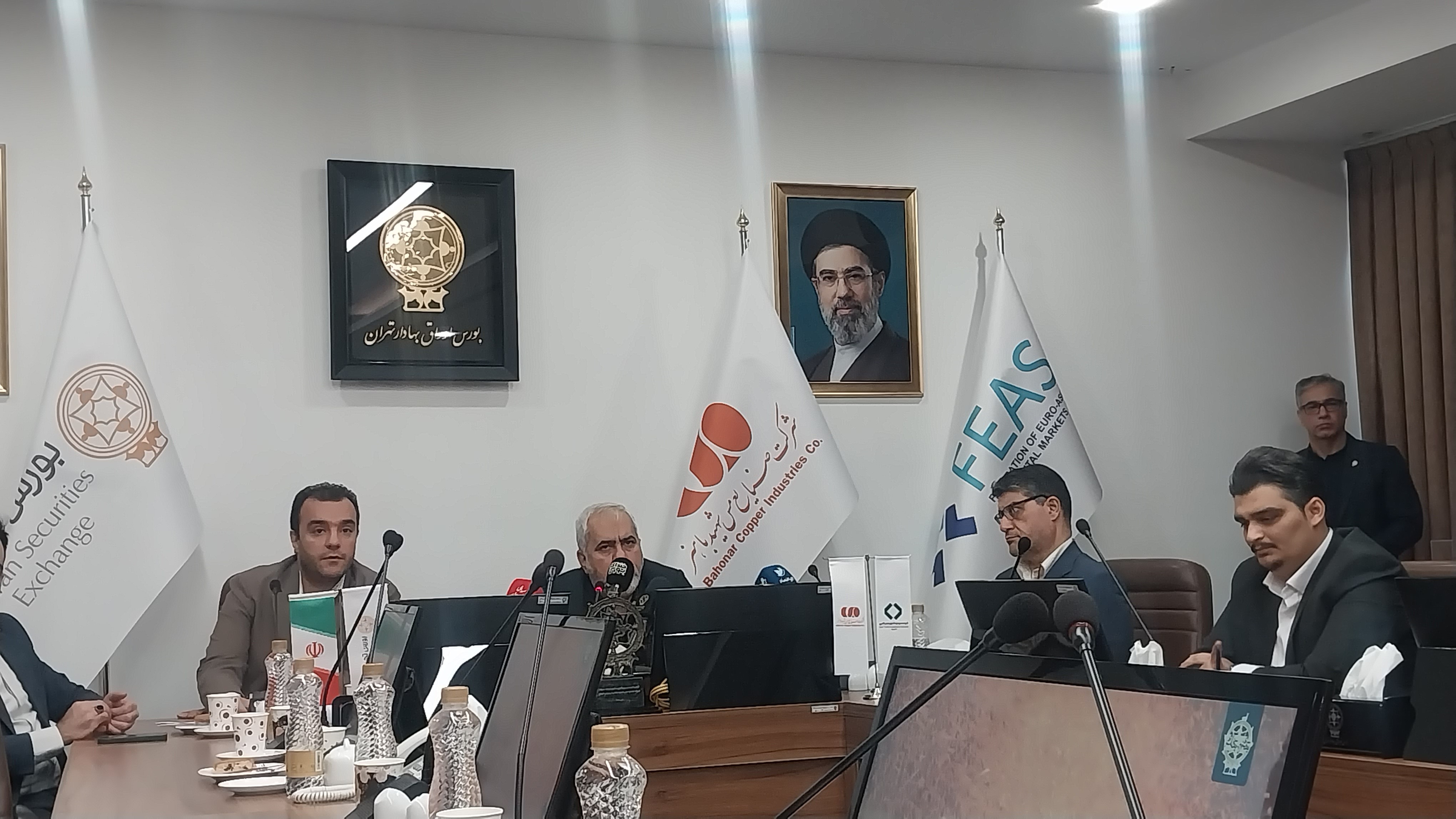
Young Journalists Club; Kimia Gholipour - Ehsan Namazizadeh, CEO of the company listed under the Fabahonar ticker on the capital market, said at a Tehran Stock Exchange issuer press conference held on Sunday: With our diverse product range and our presence in the copper and brass products market, we seek to strengthen our competitive position and increase our market share. Along this path, product portfolio diversity, appropriate delivery times and pricing terms are among the company's competitive advantages; developing product markets, preserving profit margins, consolidating activities and reducing costs are also on the agenda.
Developing higher value-added products is on the agenda
He added: Given that some of the company's products have exclusive features, our plan is to increase production while preserving profit margins, expand localization and produce higher value-added products, so that we can achieve greater profitability and increase shareholders' benefits.
The official also announced that copper slab and billet deposit certificates will be available on the Mercantile Exchange within the next month.
He went on, outlining the most important challenges facing this company and the copper industry in the areas of raw material supply, liquidity, technology, human resources and exports, and said: Given the existing level of demand for copper, and demand being greater than supply, we usually face supply restrictions, price increases and difficulty in securing raw materials on the Mercantile Exchange.
Referring to the fact that sources of raw material supply outside the company are very limited, he added: Companies that have no alternative source for supplying raw materials face particular restrictions. Therefore, the company's biggest potential challenge is raw material supply. Supplying raw materials from abroad is also difficult, and in some cases, for various reasons, imports are not permitted.
Referring to the second challenge of this complex, namely liquidity and raw material prices, he stated: As you are aware, the global copper price and the dollar rate affect raw material prices. Because of the competition that takes shape on the Mercantile Exchange, raw materials are sometimes traded at 10, 15 and even 20 percent above the base price, and this puts considerable pressure on the cost of supplying raw materials in the copper field. If we compare the economic conditions with last year, we can better examine the dimensions of this issue;
Referring to the company's third challenge, namely technology and human resources, he said: The country's industry faces a shortage of specialized human resources. Part of this problem goes back to the policies and decisions taken in the country's higher education field — a matter part of which requires governmental measures and actions.
Referring to the state of the company's export market, he stated: As you saw in the report, we effectively have no significant exports, and the exports that have been carried out have mainly been aimed at securing foreign currency for importing the goods and parts the complex needs.
Raising the question of whether the export restriction stems from the absence of a market or from product quality, he added: At times we have also had exports; we carried out indirect exports and, by selling products to complexes that needed foreign currency, helped supply the currency they required.
Namazizadeh considered the country's raw material pricing system the most important reason for the export restriction and said: About 93 percent of the cost price of products relates to raw materials, and the usually higher price of raw materials compared with global prices ties our hands and takes away our competitive advantage.
He continued: As I mentioned, the level of demand for copper in the country is high, and supply and demand on the Mercantile Exchange affect prices. At present, about three thousand tons are offered per week, and the competition that has formed to buy raw materials reduces the company's export advantage; of course, we must examine how much of this existing demand is real and how much of it relates to the needs of domestic producers — a matter I will explain further.
Namazizadeh then referred to the state of competition in the copper products market and said: In some products we face monopoly conditions and in others competition. For example, in the field of copper pipe, the production capacity of some competitors inside the country is almost 10 times our production. Other competitors have also completed their production chain; that is, they are either connected to upstream industries or are active in fields such as manufacturing chillers and industrial equipment and appliances.
Referring to the difference in the pricing basis in the market, he stated: In the private sector, the pricing basis for some products is copper scrap and waste, but our pricing basis is different. This factor also makes competition difficult for the company.
He also referred to the energy issue and emphasized that the restrictions in this field are likewise among the issues facing the industry.
Namazizadeh, in response to a question from the economic correspondent of the Young Journalists Club about the company's export trend and the impact of the current conditions on it, said: The decline in our exports has little to do with the current conditions, because this trend also existed in the year 1403 (2024-25) and in previous years. The main reason for this issue, as I explained, is the loss of our competitive advantage. The raw materials placed at the company's disposal reach us at high prices, even higher than global prices.
Namazizadeh continued: Until last year, we tried to offer the foreign currency obtained from exports within the framework of the NIMA rate. Then, in Dey of last year (December 2025 - January 2026), the second-hall mechanism was raised, and now, apparently over the past two or three weeks, the possibility of offering currency at an agreed rate has been provided. These changes can also pave the way for exports.
He then, in response to another question from the economic correspondent of the Young Journalists Club, stated: The copper industry chain must be considered as a complete whole, from the upstream sector to the downstream.
The development of the copper industry must be carried out in a balanced manner
Referring to the existing capacities in the country's copper industry, he said: Given the existing reserves, the country enjoys a suitable capacity in this industry, but we must take care that development is carried out in a balanced manner and that we do not face unbalanced development; that is, a great deal of investment and development takes place in one field, but other sectors lag behind this trend. At present, some downstream copper products produced inside the country do not have a high profit margin, such that in some cases selling raw materials is more profitable than producing downstream products. This same issue must be attended to in the concentrate field and other parts of the industry as well. Some projects have a high profit margin, but so far the necessary investment has not been made in some fields and in the production of these products in the country.
He emphasized: If investment is made in these fields and the development of the copper industry chain advances in a balanced manner, very good events can be witnessed in this industry in the future.
Source: Young Journalists Club
No comments yet — be the first to share your view.