Deputy Minister of Education: Martyrdom Is the Beginning of the Martyrs' Path of Exaltation
Gorgan — The deputy for educational and cultural affairs of the Ministry of Education, emphasizing the spiritual status of the martyrs, said: Martyrdom is not the end of life, but rather the beginning of the path of spiritual exaltation and eternal life.
Gorgan — The deputy for educational and cultural affairs of the Ministry of Education, emphasizing the spiritual status of the martyrs, said: Martyrdom is not the end of life, but rather the beginning of the path of spiritual exaltation and eternal life.
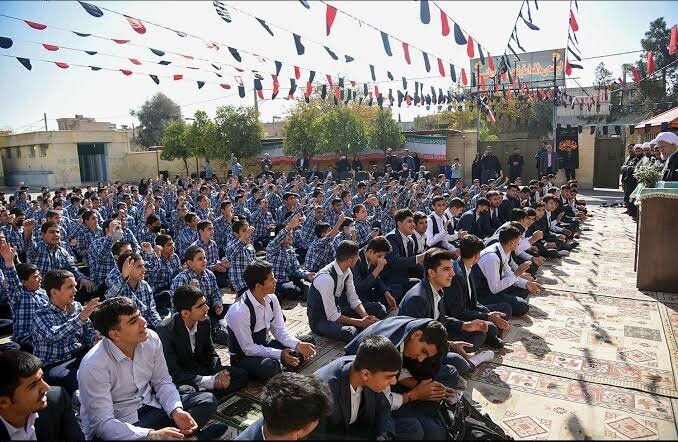
According to the Mehr correspondent, Sadeq Hosseinzadeh Maleki, on Sunday morning at the ceremony commemorating the student and educator martyrs of Golestan Province, while honoring the memory of the late Imam, the martyrs of the Islamic Revolution and the recent martyrs, stated: The martyrs, with their self-sacrifice and devotion, opened a new chapter in the history of the Iranian nation and the freedom-seeking nations of the world, and their name and path will remain enduring in the historical memory of nations.
Continuing, by recounting a memory of a mystic's meeting with the family of a student martyr, he turned to the spiritual status of the martyrs and added: In that meeting, the mystic figure had repeatedly asked the martyr's father and mother to ask their child to pray for him and to request his intercession before God — a matter that shows the deep belief in the spiritual status of the martyrs.
The deputy for educational and cultural affairs of the Ministry of Education, referring to verse 169 of Surah Aal-e Imran, 'And never think of those who have been killed in the cause of Allah as dead. Rather, they are alive with their Lord, receiving provision,' said: The Holy Quran explicitly speaks of the life of the martyrs with their Lord, and this verse is among the most important religious teachings about the status of martyrdom.
Hosseinzadeh Maleki, explaining the difference between man's worldly life and otherworldly life, stated: The opportunity of life in this world is a ground for building man's eternal future, and every person, with his choices and deeds, determines the path of his own felicity or misery; hence, making proper use of the opportunity of life and performing good deeds is of great importance.
Stating that martyrdom, in the Quranic view, does not mean the end of spiritual life, he added: Based on religious teachings, the martyrs enjoy a special status with the Lord, and martyrdom can pave the way for them to attain lofty spiritual degrees.
The deputy minister of education, in another part of his remarks, referring to the martyred Leader of the Revolution's eagerness for the station of martyrdom, noted: Attention to the status of the martyrs and the desire to reach this station is rooted in knowing the dignity of martyrdom and the spiritual life of the martyr — a dignity that has a special place in Islamic culture.
Hosseinzadeh Maleki also, referring to a memory from a television documentary about identifying the burial place of an unknown martyr after many years, emphasized the importance of families' emotional bond with the martyrs and said: Keeping alive the memory of the martyrs, in addition to honoring their self-sacrifice, can pave the way for strengthening spirituality and the new generation's connection with religious and revolutionary values.
Referring to the presence of students and educators in the ceremonies honoring the martyrs, he added: In such gatherings, an opportunity is provided for the young generation to become familiar with the way of life and ideals of the martyrs and to better know their role in shaping the country's national and religious identity.
The deputy for educational and cultural affairs of the Ministry of Education, referring to the number of educator and student martyrs of Golestan Province, said: This province has presented 110 educator martyrs and 490 student martyrs, and the memory of these martyrs must be kept alive in the educational and cultural programs of schools.
Hosseinzadeh Maleki, in conclusion, emphasizing the necessity of promoting the culture of self-sacrifice and martyrdom among students, noted: The young generation's familiarity with the life and way of the martyrs must go beyond the level of holding ceremonies and become a practical model in behavior, responsibility, study and service to society.
Source: Mehr News Agency
Related stories

Completion of Mashhad's Rail Network with the Launch of Phase One of Metro Line 3

Construction Costs Have Taken the Breath Away from Alborz Builders