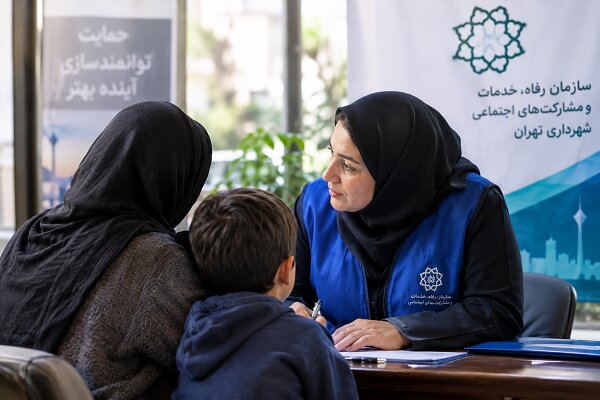
According to a Mehr reporter, social harms are not limited to the harmed individual alone; sometimes his family and children also face problems that need attention and support. Identifying these families and examining their needs is one of the topics that Tehran Municipality pursues through the activities of the Rehabilitation and Social Reintegration Administration; an administration that is to provide the ground for support services and prevent individuals from returning to the cycle of social harms by following up the status of clients and contacting their families.
Abdol-Majid Rahmani, CEO of Tehran Municipality's Welfare, Services and Social Participation Organization, in an interview with a Mehr reporter, reported 3,500 contacts with clients to form files and said: Ultimately, 750 files were formed, in connection with which the clients' families have also been contacted and services are provided to them.
Referring to the planning to provide services in eight axes, he added: The process of serving clients is underway, and in the first step, services will be provided to the holders of these 750 files. Education, treatment, livelihood, employment, psychological services and housing are among the axes under which clients will be supported.
Following up clients until the harm conditions are removed
One of the important topics in the rehabilitation process of clients is the continuity of following up their status and that of their families; especially in circumstances where there is a possibility of the individual returning to the cycle of social harms.
Rahmani stated in this regard: There is no specific time for following up the status of clients, because as long as a client is exposed to harm, he will be under supervision and we are in contact with his family.
The CEO of Tehran Municipality's Welfare, Services and Social Participation Organization continued: Given that there is a possibility of return to harm, we try, through continuous follow-up and ensuring the client's empowerment, to prevent his return to harm.
Identifying the family needs of clients
According to the description of the activities of the Rehabilitation and Social Reintegration Administration, identifying people in need of rehabilitation services, examining the individual, family, psychological, economic and social status of clients and assessing their problems and capabilities are among the missions of this administration. Forming social-work files and developing an intervention plan suited to each individual's conditions are also pursued in this framework.
In this process, the family's status and its capacity to support the client are examined. Providing counseling and training to families, striving to reduce family conflicts, strengthening healthy relationships and establishing contact with related organizations to identify support resources are also among the planned activities.
Examining the status of clients' children and families' needs can also be effective in identifying areas in need of support. The aim of this approach is that Tehran Municipality's Welfare Organization services not be limited only to the individual present at the center, and if there is a need, his family also be included in the social support process.
Rehabilitation centered on employment and individual independence
Economic and vocational empowerment is also among the activity axes of the Rehabilitation and Social Reintegration Administration. According to the description of this administration's activities, identifying clients' talents, skills and job interests, introducing eligible individuals to technical and vocational training courses, and following up employment, internship and self-employment opportunities fall in this section.
Cooperation with related bodies and institutions to provide economic opportunities is also pursued with the aim of increasing financial independence and reducing the economic factors effective in returning to harm. Alongside these measures, planning for psychological, social and behavioral rehabilitation, referring individuals to treatment and counseling centers if needed, and strengthening individual skills, responsibility and decision-making are other areas of this administration's activity.
Preventing return to the cycle of harm
Alongside providing support services, identifying risk factors and following up clients' status after receiving rehabilitation services are also in the mission of the Rehabilitation and Social Reintegration Administration. According to the description of this administration's activities, developing a plan to prevent return to harm-causing conditions, identifying warning signs and timely intervention if a problem occurs are among the measures foreseen to reduce the likelihood of clients returning to harm.
Cooperation with government organizations, support centers, people's institutions and charities, and using the capacity of counseling, treatment, education and employment centers, are also other parts of this process. Recording the measures and services provided, preparing periodic reports and assessing clients' progress in the rehabilitation path are also considered for reviewing the results of interventions and identifying the strengths and weaknesses of programs.
In total, Tehran Municipality's Rehabilitation and Social Reintegration Administration operates with a focus on identifying the needs of clients and their families, providing support services in eight axes and continuously following up the status of individuals exposed to harm. According to Rahmani, these follow-ups are not limited to a specific time and will continue as long as the client is exposed to harm; an approach whose goal is empowering individuals and preventing their return to the cycle of social harms.
Source: Mehr News Agency