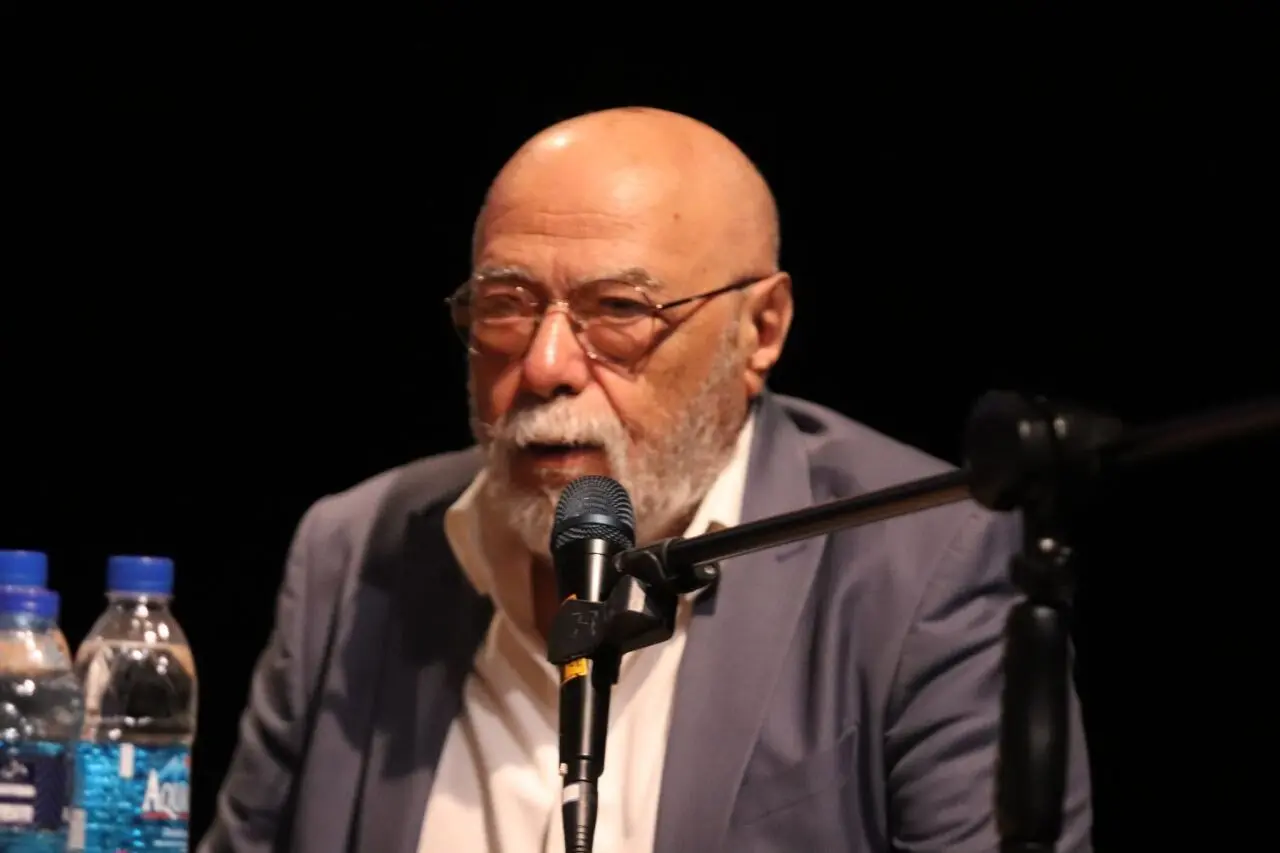
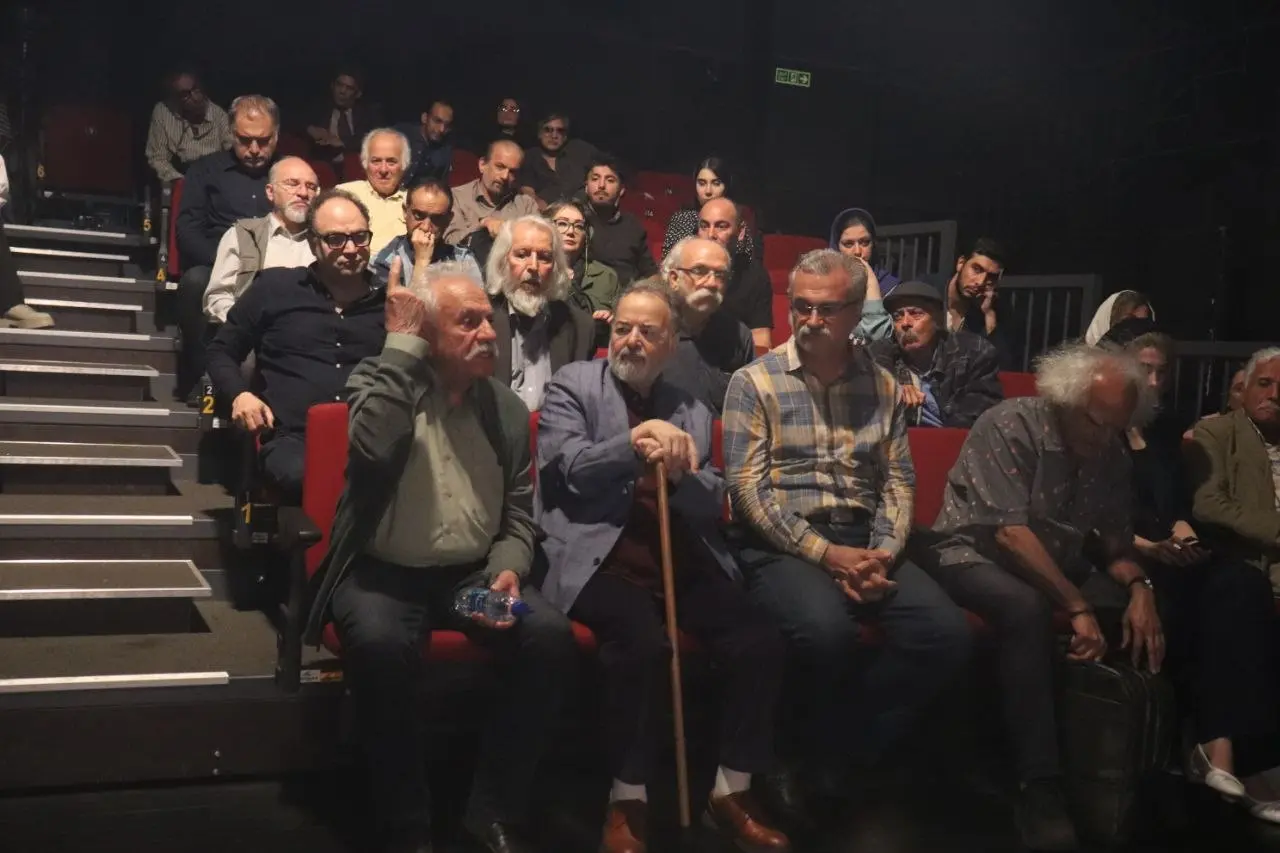
According to ILNA, citing the public relations of the Theatre House, the specialized meeting "The Age of the Director," on the topic of "examining the reasons for the reduced activity and withdrawal of professional theatre directors in the last decade," organized by the Directors' Guild of the Theatre House and hosted by Dr. Majid Giahchi, was held in the Ostad Javanmard Hall of the Theatre House. At this meeting, Akbar Zanjanpour, Ghotbeddin Sadeghi and Hossein Kiani, presenting their views on the state of directing in Iranian theatre, examined the obstacles to artists' professional activity, economic and managerial problems, the state of production and performance of dramatic works, and the necessity of redefining theatre's relationship with society.
At the beginning of this ceremony, Esmail Khalaj welcomed the attendees and considered the gathering of theatre directors a good event.
Theatre Must Be the People's Cultural Nourishment, Not Merely a Place for Selling Tickets
Akbar Zanjanpour, the veteran theatre director and actor, at this meeting expressed dissatisfaction with the conditions governing Iranian theatre and emphasized that the current situation is not proportionate to the real capacities and standing of this art. Referring to his more than 60 years of activity in the field of theatre, he said: "After 60 years of working, I have reached the conclusion that it seems I was mistaken, because I do not see the result that I had expected."
Emphasizing the necessity of theatre's re-linking with life and the cultural needs of society, Zanjanpour believes theatre must become part of the people's cultural life, in such a way that audiences regard it as a need for their lives and go with eagerness to watch dramatic works. In his view, theatre is not merely an arena for being seen, fame or selling tickets; rather, it is a space for the human being's encounter with the self, others, nature and the surrounding world — a space that can lead to the spiritual refinement of the artist and the audience.
This veteran artist also emphasized the necessity of children and adolescents becoming acquainted with theatre from the elementary school period, and considered the development of theatre education and culture among the effective factors in converting this art into one of society's cultural needs. In his belief, the formation of a stable connection between the people and theatre requires that this art, from the first years of life, be placed within the experience and knowledge of the new generations.
Zanjanpour went on to name the structural problems of producing and performing dramatic works among the factors in the exhaustion of directors, and pointed to the limitation of performance halls, the difficulty of planning for production, and the absence of the possibility of continuous activity for many artists. According to him, even artists who possess professional knowledge, experience and ability face obstacles in the current structure that take away from them the possibility of assembling a group and performing a work.
This veteran director and actor, criticizing individual-centeredness in the structure of theatre production, emphasized the necessity of the formation of independent and stable dramatic groups. He suggested that instead of the whole process of theatre production and support taking shape around individuals, professional groups be formed with a defined combination of actors, directors, designers and other executive factors, and be able to have continuous and planned activity.
In such a model, the responsible institutions can, instead of ad hoc interaction with individuals, enter into dialogue with dramatic groups and provide the ground for their professional and continuous activity. This method, in addition to creating stability in the production process, can lead to the formation of a more effective connection between artists, supporting institutions and audiences.
Zanjanpour also noted that the issue of theatre cannot be reduced merely to the necessity of artists updating themselves, because many artists, despite possessing up-to-date knowledge and awareness, still do not have the possibility of working and producing a work. From this perspective, solving theatre's problems requires a revision of managerial mechanisms, the manner of supporting production, and the structure of dramatic groups' activity.
In conclusion, emphasizing the necessity of returning to the human and social nature of theatre, he recalled that the continuation of this art's life needs the provision of the possibility of collective activity, the strengthening of the connection between artists and audiences, and the creation of a structure that converts professional talents and experiences into a real possibility of production and performance.
Continuing this ceremony, the stamp of the Directors' Guild of the Theatre House was unveiled.
Theatre Directors Are Neither Incapable nor Lazy; the Means of Work Are Not Provided
Ghotbeddin Sadeghi, theatre director and researcher, continuing this meeting and emphasizing that the reduced activity and withdrawal of professional directors cannot be attributed merely to the individual performance of artists, considered structural problems, budget shortage, weak executive infrastructure and the absence of long-term planning among the most important factors limiting professional activity in Iranian theatre.
At the beginning of his remarks, Sadeghi, referring to the state of the various currents of Iranian theatre, criticized the dominance of commissioned, commercial and entertainment works, and believed that a considerable part of the existing productions is distant from authentic experimentalism in content, design and acting styles. According to him, in such conditions, serious works endowed with thought and creativity have a limited share of theatre's performance space, and the possibility of growth and continuation of activity is not provided for many professional artists.
This theatre director and researcher counted the shortage of suitable halls and the underdevelopment of performance infrastructures among the fundamental obstacles to the continuous activity of theatre groups. Criticizing the limitation of state facilities and the unsuitable conditions of some private halls, he explained that the absence of sufficient technical facilities, the limited opportunity for preparing and performing works, and the difficulties of production impose additional pressure on directors and dramatic groups.
Sadeghi also, referring to the limitation of the credits allocated to theatre production, considered the insufficient allocation of financial resources one of the main roots of the reduction of professional activity. He emphasized that support for theatre must not be summed up in limited and ad hoc assistance; rather, it is necessary that a stable system be formed for financing dramatic productions and supporting artists across the country.
In this same context, he named the absence of coherent planning and policymaking in theatre management among the other fundamental problems of this field, and said the administration of theatre needs a clear program for developing infrastructures, supporting production, determining cultural priorities and creating a long-term outlook. In his view, inviting professional directors to produce a work, without providing the executive conditions and necessary support, cannot lead to the continuation of their activity.
Referring to the experience of some European countries in supporting dramatic groups, Sadeghi emphasized the necessity of benefiting from stable models of financing and professional management of theatre. He considered the role of municipalities and public institutions in supporting dramatic groups and providing production costs among the mechanisms that can help preserve the life of theatre and the continuation of artists' activity.
This artist also emphasized the necessity of the formation of professional groups enjoying continuous support — groups that can, with a defined plan, have continuous productions and, instead of dependence on case-by-case support, enjoy the possibility of long-term activity.
In another part of his remarks, he raised the proposal of creating an independent and capable institution for supporting national theatre — an institution that, benefiting from style-owning directors and prominent artists, would provide the ground for the production and performance of distinguished Iranian works and attend to preserving and raising the cultural and artistic quality of performance in the country.
Sadeghi at the same time emphasized the necessity of simultaneous attention to distinguished international works, and considered the expansion of artistic horizons and acquaintance with the performance experiences of other countries necessary for the dynamism of theatre. In his view, strengthening national theatre and benefiting from international experiences can, alongside each other, help to raise the quality of works and develop the country's artistic capacities.
This director, continuing, criticized the reduced connection of some dramatic productions with social issues, history, culture and the concerns of the people, and recalled that theatre must not be reduced merely to entertainment or a commercial activity. In his belief, this art finds meaning in connection with society and can be a ground for thinking about human issues, recognizing social crises and raising the level of awareness and cultural taste of audiences.
Sadeghi also, criticizing the increase in the costs of watching theatre and the distancing of some works from the needs and economic ability of audiences, emphasized the necessity of preserving the bond between artists and the people. He believes serious and thought-provoking theatre must have the possibility of connection with a broader spectrum of society, and economic conditions must not limit audiences' access to cultural and artistic experience more than before.
In another part of his remarks, he referred to the experience of his recent activities in Sanandaj and cooperation with artists in various cities, and, emphasizing the continuation of his professional activity, considered the existing problems to be the result of limited facilities and structural obstacles, more than of artists' incapacity or lack of motivation.
In summing up his view, Sadeghi stated that solving the problem of professional directors' reduced activity requires change in the managerial structure, a revision of the manner of budget allocation, the development of infrastructures and the formulation of a comprehensive program for the future of theatre. In his belief, until the possibility of continuous production, professional support and management based on specialized knowledge of theatre is provided, one cannot expect thoughtful and style-owning directors to enjoy an equal and effective opportunity for activity.
A Theatre That Does Not See Society Will Not Be Seen by Society Either
Hossein Kiani, theatre director and playwright, in another part of the "Age of the Director" meeting, criticizing the dominance of economic relations over dramatic productions, the weakening of the director's creative position and theatre's distancing from society's issues, emphasized the necessity of revising the structure of theatre production and support and of formulating a model proportionate to Iran's cultural and social conditions.
At the beginning of his remarks, Kiani, raising the expression "the age of the director-less," addressed the difference between the director's executive presence in the process of production and his artistic and creative position. In this artist's belief, directing does not merely mean the coordination of executive factors or the management of a group; rather, the director, by creating meaning, shaping aesthetics and converting the written text into a living performance, opens a new world before the spectator.
He considered the domination of capital and an unhealthy economy over theatre among the factors effective in weakening this position, and said that when return of capital, the producer's profit, the fees of famous faces and commercial considerations become the main priorities of production, the possibility of the formation of an independent artistic identity for the director will be limited.
This director and playwright, criticizing the spread of celebrity-centered theatres and glitzy productions, emphasized that the fame of actors, luxurious halls and superficial attractions, by themselves, are not a guarantor of a work's artistic value. In his view, the essential role of the director is beyond the performance of the text and returns to the creation of the semantic and aesthetic world of the work.
In explaining this view, Kiani referred to the artistic experiences of Dr. Ali Rafiei and Dr. Ghotbeddin Sadeghi, and considered the benefit from painting, Iranian miniatures and other capacities of the visual arts and cultural heritage among the paths of forming a visual language and mise-en-scène in theatre. He emphasized the point that the director's creative identity can take shape in the manner of confronting the text, designing the visual world and using cultural and artistic capacities.
Problem-Free Theatre: A Serious Harm to the Art of Performance
In another part of his remarks, Kiani, emphasizing the necessity of thought and problem-orientation in theatre, counted "problem-free theatre" among the most important harms of this art. Referring to views that attribute this concept to the late Dr. Gholamhossein Saedi, he recalled that theatre takes shape with human and social questions, and its function is not only to entertain the audience; rather, it must invite the audience to reflection, questioning and confrontation with the surrounding realities.
According to him, when cultural, social, political and economic issues are set aside from dramatic works, the performance forms may still have visual appeal, but this appeal does not necessarily lead to the production of thought and meaning.
In this same context, Kiani spoke of the concept of "economic censorship" and considered it a hidden factor in limiting the possibility of raising serious issues in theatre — a factor that, alongside cultural limitations, can direct the production path toward works that are lower-risk commercially and distant from society's fundamental questions. From this perspective, economic relations affect not only the possibility of producing and performing works, but also the choice of topics and the range of issues that can be raised in theatre.
The Necessity of Redefining the Relationship between Theatre and Society
This artist named theatre's distancing from the real life of the people among the other fundamental challenges of this art, and believed theatre cannot continue its life in a world separate from people's experiences, concerns and social conflicts. In his belief, the spectator is one of the main elements of theatre's dynamism, and this art can regain its place in society when it recognizes the issues and realities of people's lives.
Referring to the experience of performing theatre for mine workers, Kiani emphasized the role of the audience in giving life to the performance, and said the living connection between the stage and the spectator is an inseparable part of the nature of the art of performance. In this context he stated: "A theatre that does not watch society — our society will not watch it."
In his view, attention to society does not merely mean the choice of social topics for plays; rather, it requires knowledge of the lived experience of the people and the creation of a real connection between the dramatic work and the audience. Such a connection can help the return of theatre to its cultural and social place and provide the ground for audiences' more effective encounter with dramatic works.
From Waiting for Government Support to the Necessity of Designing an Independent Model
Continuing, Kiani, raising the question of what the long-term strategy of Iranian theatre for the future is, emphasized the necessity of passing beyond permanent waiting for government support and of revising the models of development of this art. He believed the experiences of other countries, without attention to cultural and structural differences, cannot by themselves be a solution for Iranian theatre, and it is necessary that a model proportionate to domestic conditions be designed.
He also emphasized that theatre's problems cannot be attributed merely to the performance of government institutions, supervisory limitations or the shortage of financial support. In this artist's view, part of the existing situation returns to the internal shortcomings of the theatre community, reduced activity and the necessity of revising the methods of professional activity.
Kiani considered the precise pathology of theatre's situation, deeper knowledge of society, redefining the relation of the art of performance with national culture, and strengthening the ability of conceptualization among the fundamental needs of this field. Referring to the importance of reproducing national culture and Iran's historical and mythological capacities, he emphasized the necessity of the formation of a fresh approach for theatre's confrontation with today's issues.
In conclusion, this director and playwright, inviting a simultaneous revision of the external and internal factors of theatre's crisis, noted that the future of this art depends on devising fresh solutions, strengthening its connection with society and providing the possibility of effective activity for the young generation of artists.
The Necessity of Revising the Structure of Theatre Management and Support
The sum of the views raised at the specialized meeting "The Age of the Director" showed that the issue of the reduced activity and withdrawal of professional directors cannot be explained by a single factor. The limitation of halls and technical facilities, the budget shortage and the absence of a stable system of support for production, the absence of long-term planning, the dominance of commercial relations, the weakening of the director's creative position, and the distancing of part of dramatic productions from society's issues were among the axes emphasized in the remarks of the three artists.
Alongside these issues, the necessity of the formation of independent and professional groups, creating the possibility of continuous activity for artists, strengthening theatre's bond with the life of the people, developing theatre education from childhood, attention to national culture and heritage, and benefiting from international experiences were also raised as solutions for improving the state of this art.
The views presented at this meeting emphasized the necessity of a comprehensive look at the future of Iranian theatre — a look in which financial support accompanies the development of infrastructures, specialized management accompanies long-term planning, and professional production accompanies attention to the cultural and social needs of audiences. On this basis, providing a real possibility of producing and performing dramatic works requires a simultaneous revision of theatre's managerial, economic and professional structures.
The specialized meeting "The Age of the Director," with the aim of examining the reasons for the reduced activity and withdrawal of professional theatre directors in the last decade and dialogue about the grounds and obstacles of artists' activity, was held by the Directors' Guild of the Theatre House, hosted by Dr. Majid Giahchi, in the Ostad Javanmard Hall of the Theatre House.
Attendees and Executive Factors of the Meeting
At this meeting, in addition to the speakers, a group of artists and activists of the field of theatre were present.
Also continuing, the members of the Directors' Guild of the Theatre House raised the points and topics related to the reduced activity of directors.
The presentation of this program was undertaken by Majid Giahchi. Also, at the beginning of this program, Maziar Lorestani sat in conversation with Akbar Zanjanpour.
At this meeting, Akbar Zanjanpour, Ghotbeddin Sadeghi and Hossein Kiani were present as speakers and Dr. Majid Giahchi as presenter. Also, Iraj Rad, Mohammadreza Khaki, Bahram Ebrahimi, Majid Mozaffari, Shohreh Soltani, Reza Fayyazi, Majid Jafari, Mohsen Hajyousefi, Iraj Afshari-Asl, Alireza Darvishnejad, Mohsen Hosseini, Kourosh Narimani, Babak Vali, Mehrdad Ziaei, Nasser Avizheh, Mehdi Ghal'eh, Keramat Roudsaz, Mehdi Shamsaei and Gholamhossein Lotfi were among the attendees of this meeting.
Alireza Gilvari, the CEO of the Theatre House, together with the members of the board of directors of the Directors' Guild of the Theatre House, including Esmail Khalaj, Majid Karimi, Maziar Lorestani, Hadi Amel, Hossein Parastar, Gholamreza Arabi, Kahbod Taraj and Meysam Abdi, together with Sasan Shakourian, the inspector of the guild, and Sara Dashti, the secretary of the guild, were among the other attendees of this meeting.
Source: ILNA News Agency