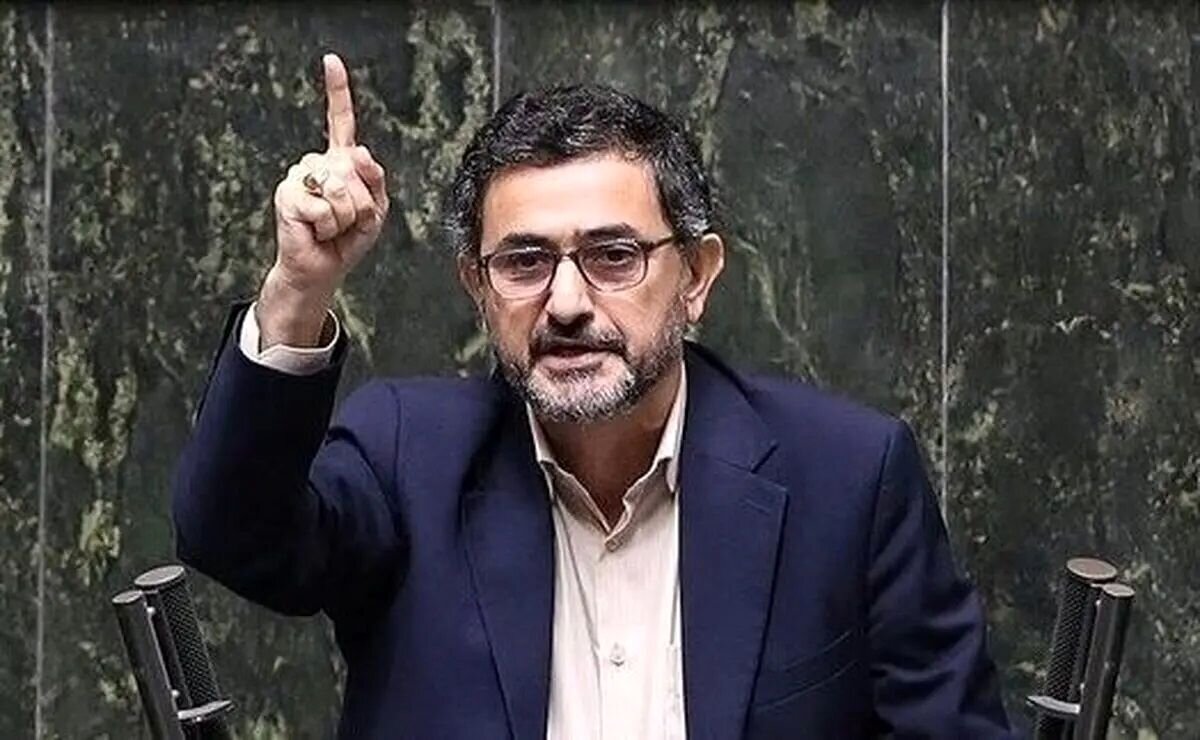
According to Tabnak; the President yesterday, at the ceremony for the start of the population and housing census, emphasizing that we must exit the situation of “no war, no peace”, so that we can plan in a transparent and predictable environment, has said: “In a state of indecision, planning is not possible. Therefore, it is necessary to exit the ambiguity. For this reason, the martyred Leader ordered: go and finish the work. But these dishonorable people disrupted the rules. But I still believe we must go and exit the no war, no peace situation.”
These remarks of the President are a word of truth which, if not understood correctly, may go astray.
The remarks of Dr. Pezeshkian about the necessity of the country's exit from the no war and no peace situationpose a fundamental question before the country's foreign policy and domestic management: With an enemy who neither abides by his own agreements, nor abandons the escalation of sanctions and military actions, nor hides that he seeks the destruction of Iran, how can a lasting solution be reached?
The principle of exiting the erosive no war, no peace situation is a proposition worthy of reflection, but the main issue is not the necessity of ending this situation, but rather how to realize it. Compromise in international relations can lead to the resolution of disputes when the parties abide, at least, by a minimum of common rules, mutual commitments, and the costs of violating an agreement. Iran's issue with America is not merely a difference over a few specific subjects; the issue is an identity conflict with a long record of hostility, sanctions, pressure, and distrust, which has also shown itself in the experience of the nuclear negotiations. America's exit from the JCPOA, despite the accepted commitments and the continuation of the pressure policy, has made more serious the question of to what extent renewed reliance on negotiation, without a change in the other side's calculations, can secure Iran's national interests. With an enemy who, from the first day of the activity of Dr. Pezeshkian's government, at the same time as intensifying economic pressures, has followed the path of hostile actions and even in the middle of diplomatic processes turned to military action, can one think of an honorable compromise? Negotiation, of course, is a tool of foreign policy, not a goal independent of security, independence, and national interests, and certainly its value also depends on the result it brings for the country in practice.
There is no doubt that the continuation of the no war, no peace situationcan lead to the erosion of the country's economic, social, and managerial capacities. For this reason, ending the erosive situation is a strategic necessity. But can any agreement end this situation? If compromise means a one-sided retreat in the face of pressure, without the other side abandoning threats, sanctions, and intervention, the result will be not the end of the crisis, but its transfer to another stage. Therefore, the fundamental question is not whether we should negotiate or not, but rather how negotiation can be transformed from a position based on one-sided pressure into a process relying on mutual interests and practical guarantees.
The Islamic Republic of Iran has had numerous experiences of negotiation and agreement in past decades. These experiences show that diplomacy, even in the most difficult conditions, can be a tool for reducing tension and securing part of the country's interests, but at the same time, no agreement, merely because of its signing, guarantees the future behavior of the other side. Every new diplomatic path must be based on a realistic assessment of the other side's behavior, the possibility of verifying the commitments, enjoying implementation guarantees, and anticipating the costs of violating the agreement. In such a framework, diplomacy and national power are placed not against each other, but in line with each other. Yes, one must exit the no war and no peace situation and not allow the enemy to reach his goals with a war of attrition, but how? With an enemy who twice pounded the negotiating table with artillery, does not abide by his own signature and commitment, and unlike his predecessors has thrown away his velvet glove and drawn the sword against Iran, how can one enter through the door of negotiation and compromise? For confronting such an enemy, is there any option left other than becoming strong and resistance? The people and the armed forces have shown over the past eight months that, with authority, resistance, and steadfastness, they have unraveled all the enemy's threads; certainly the honorable government has also used all its power, with support and financial and logistical backing, to leave the enemy unsuccessful in the war of attrition, but sometimes it is observed that some executive bodies have not yet taken on a war posture and have lagged behind the government's locomotive. If the enemy, in addition to military pressure and sanctions, has opened an account on eroding the country's economic power and the psychological resilience of society, confronting this strategy is not possible merely with political positions and occasional measures. Executive bodies must act in proportion to the country's conditions. From the stable supply of essential goods and controlling the effects of the economic pressure, to removing the obstacles to production, reducing administrative inefficiency, and creating reassurance in society. The more efficiently the government acts in administering affairs, the more the costs of the enemy's attrition strategy increase and the social capital necessary for passing through the crisis is strengthened.
Therefore, the answer to this question — whether against such an enemy any option other than becoming strong and resistance remains — depends on our definition of resistance. If we take resistance to mean preventing the imposition of the enemy's will and increasing the country's power to defend national interests, diplomacy can also be part of this same strategy. Compromise can approach the end of hostility when the enemy cannot benefit from negotiation, sanctions, and a war of attrition to impose his demands. Exit from no war and no peace, without a change in the other side's calculations, is difficult, and changing these calculations, more than anything, needs national power, internal cohesion, and diplomacy relying on reality.
Iran's issue today is not simply a choice between war and negotiation . The issue is the simultaneous management of two fields: the field of confronting foreign pressure, and the field of efficiently administering the country. In the first field, defensive deterrence, national cohesion, and diplomacy based on practical guarantees are necessary. In the second field, the government must, with a specific program for livelihood, production, trade, employment, and reform of inefficient procedures, not allow foreign pressure to lead to the erosion of domestic power. If the enemy is looking for a war of attrition, one must not allow managerial weakness, economic uncertainty, and dissatisfaction arising from solvable problems to become factors intensifying this erosion.
Source: Javan Newspaper