Sports and Healthy Nutrition, the Two Wings of Kermanshah's Health; Alarm Bell of Inactivity in the New Generation
Kermanshah - The development of sports for all, the reform of nutrition patterns and the reduction of physical inactivity are the three essential necessities for improving Kermanshah's health, whose realization requires the development of sports infrastructure and the cooperation of executive bodies.
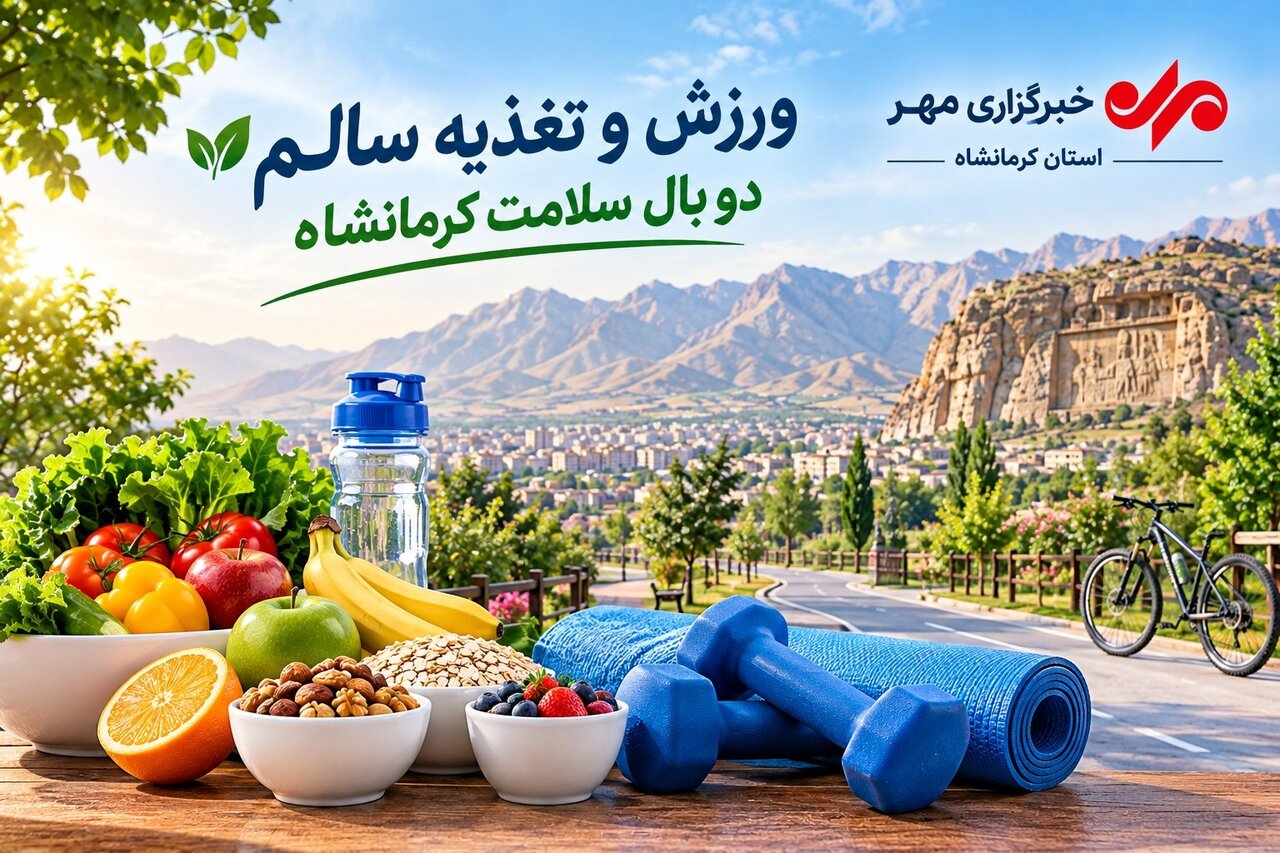

Kermanshah - The development of sports for all, the reform of nutrition patterns and the reduction of physical inactivity are the three essential necessities for improving Kermanshah's health, whose realization requires the development of sports infrastructure and the cooperation of executive bodies.
Mehr News Agency, Provinces Desk - Kowsar Yavari: Public health is considered one of the most important indicators of the development of societies, and its realization is not limited solely to the expansion of medical services; rather, reforming lifestyles, paying attention to healthy nutrition and providing the ground for continuous physical activity also play a decisive role in this path. In circumstances where changing lifestyle patterns, increased use of digital tools and reduced daily movement have become a serious concern, attention to preventive solutions can pave the way for reducing diseases and increasing citizens' quality of life.
Public sports and healthy nutrition are two complementary components in maintaining physical and mental health, and neglecting either one can affect the effects of the other. On the one hand, excessive consumption of high-calorie foods, sweets, sweet drinks and salty snacks, alongside reduced consumption of fruits, vegetables, legumes and whole grains, provides the ground for increased overweight and contracting non-communicable diseases, and on the other hand, physical inactivity and prolonged sitting aggravate these risks.
Meanwhile, Kermanshah Province has considerable natural and urban capacities for the development of sports for all. Foothills, natural promenades, walking and cycling paths, parks and urban green spaces can provide a suitable platform for expanding sports activities among different age groups; a capacity whose effective use requires scientific planning, proper management and providing safe and easy access for citizens.
The development of sports for all should not be limited solely to holding occasional sports programs or event-based activities, but must become part of families' lifestyles. Holding family walks, group hikes, student camps, neighborhood-based competitions and programs suited to the ability of the elderly can help increase social participation and strengthen public vitality. Also, creating safe walking and cycling paths and equipping public spaces provides the ground for greater public presence in physical activities.
Alongside physical activity, reforming dietary habits is also among the important necessities of the health field. Reducing salt and sugar consumption, paying attention to the size of meals, increasing consumption of nutritious foods and raising families' awareness about the principles of proper nutrition are measures that can be effective in preventing overweight, obesity, type 2 diabetes, high blood pressure and cardiovascular diseases.
This issue is of greater importance in childhood and adolescence, because dietary and behavioral habits take shape in this period and can continue into adulthood. Skipping breakfast, consuming snacks of low nutritional value, excessive use of sweet drinks and reduced opportunities for play and movement are among the issues for which families, schools and health centers must plan in order to correct them.
On the other hand, athletes also need nutrition suited to the type of activity, adequate fluid intake, regular sleep and principled recovery in order to maintain health and achieve proper performance. Uniform nutritional recommendations for all individuals and arbitrary consumption of supplements can harm athletes' health; therefore, raising nutritional literacy and providing access to specialized consultation is part of the requirements for the principled development of sports in the province.
The realization of these goals requires the cooperation of the University of Medical Sciences, the General Directorate of Sports and Youth, Education, municipalities, sports boards, media and families. In this regard, examining the nutritional challenges of the people of Kermanshah County, the importance of specialized education in the field of sports nutrition, and the necessity of better use of the province's natural capacities to expand sports for all are topics that have been addressed in conversation with experts in the field of health and sports medicine.
Healthy Nutrition and Continuous Activity; The Solution for Preventing Non-Communicable Diseases
Mohammadsaeed Gholami, a nutrition expert at the Kermanshah County Health Center, in conversation with a Mehr reporter, referring to the change in dietary patterns and increased concerns about overweight and obesity, stated: In recent years, the consumption of processed foods, fast foods, sweets and high-calorie snacks has increased, and alongside reduced physical activity and the expansion of sedentary lifestyles, the necessity of paying attention to reforming dietary habits has grown.

He added: One of the important nutritional problems is receiving energy beyond the body's needs and consuming foods that, in small volume, have many calories. Therefore, preventing overweight is not achieved only by increasing physical activity, and reforming the dietary pattern must also be seriously placed on the agenda.
Gholami, referring to the consequences of excessive salt and sugar consumption, stated: Excessive salt intake can increase the risk of high blood pressure and cardiovascular diseases, and high consumption of simple sugars, sweets and sweet drinks is also associated with an increased risk of obesity and type 2 diabetes.
He continued: The general recommendation for adults is consuming less than five grams of salt per day, but consuming salty bread, processed foods and salty snacks can increase daily salt intake. Also, reduced consumption of fruits, vegetables, legumes and whole grains, especially replacing whole bread with bread made from refined flour, may reduce the intake of fiber and some nutrients.
This nutrition expert, emphasizing the necessity of paying attention to micronutrient deficiencies, stated: Inadequate intake of some nutrients, including vitamin D and iron, is among the important issues in the field of nutrition, and anemia caused by iron deficiency, especially in women of childbearing age, needs attention and follow-up.
Reforming Dietary Habits Begins from Family and School
Gholami, stating that the family is the first environment in which children's dietary and behavioral habits take shape, said: Education in healthy nutrition must begin from the family and continue with the participation of schools, health centers and the media.
He added: Preparing nutritious snacks and homemade bites, increasing consumption of fruits and vegetables, greater use of legumes and whole grains and replacing water instead of sweet drinks are among the measures that can improve the quality of the diet of children and adolescents.
This nutrition expert, referring to the role of parents being role models, stated: One cannot expect children to adhere to healthy nutrition and sports while parents do not observe these principles in their daily lives. Allocating a specific time for family walks and activities suited to the conditions of family members can help create healthy habits.
Gholami also considered organizing school buffets necessary and stated: Skipping breakfast and consuming snacks of low nutritional value may affect the feeling of hunger and concentration of some students. Therefore, healthy and nutritious foods must be available in schools, and teaching how to choose a suitable snack, reducing consumption of sweet drinks and the importance of breakfast should be included in educational programs.
He emphasized: The nutritional needs of children differ from those of adults and professional athletes; for this reason, strict diets and severe weight loss are not recommended for students, and their natural growth must be given priority. Students who face problems such as considerable overweight, underweight or growth disorders should, if necessary, be referred to comprehensive health service centers and nutrition experts for specialized evaluation.
Supplements Do Not Replace a Balanced Diet
This nutrition expert, referring to the importance of sports nutrition, said: The diet plan of athletes must be adjusted according to the type of discipline, the intensity and duration of training, the level of physical fitness, age, health status and sports goals, and a single diet plan cannot be recommended for all individuals.
He considered adequate fluid intake one of the important principles of sports nutrition and added: Dehydration can reduce sports performance and, in hot conditions, increase the risk of heat-related illnesses. Also, severe calorie restriction and strict diets for weight loss may cause a drop in performance, a reduction in muscle mass and damage to bone health.
Gholami, referring to the role of protein in tissue repair and maintaining muscle mass, stated: Eggs, dairy products, meat, fish and legumes are suitable sources of protein and must be included in the diet plan in proportion to each individual's needs. Carbohydrates are also important for supplying energy and rebuilding muscle glycogen stores.
He continued: Adjusting meal times, consuming carbohydrates and protein after training, supplying needed fluids and having adequate and regular sleep are effective in restoring the body's strength. Proper recovery is the result of a set of factors including balanced nutrition, adequate hydration, rest and a principled training program.
This nutrition expert, warning against the arbitrary consumption of supplements, stated: The belief that every individual needs supplements upon starting sports is not correct, and many individuals can supply their nutritional needs with a balanced diet.
Gholami added: Some supplements may contain undeclared compounds, prohibited substances or contaminants, and their disproportionate consumption can also create complications for health. Therefore, athletes must consult a physician or nutrition specialist before consuming supplements, and coaches, instead of generally recommending the consumption of these products, should refer individuals to qualified experts for specialized evaluation.
He emphasized the necessity of developing coherent educational programs in Kermanshah County and said: The cooperation of the University of Medical Sciences, the General Directorate of Sports and Youth, sports boards and Education is essential for producing scientific content, holding training courses and increasing athletes' access to specialized consultation.
Gholami noted: Promoting healthy nutrition and regular physical activity can help prevent non-communicable diseases. In this path, identifying at-risk individuals, educating families, reforming educational and work environments and providing appropriate access to health services must be addressed.
Kermanshah's Natural Capacities; An Opportunity to Bring Movement Back to People's Lives
Mostafa Akbari, a sports medicine specialist, in conversation with a Mehr reporter, emphasizing that sports for all is one of the main links in the chain of society's health, stated: The development of physical activity should not be defined solely within the framework of the duties of sports authorities; rather, bodies related to health, social, cultural and educational institutions and policymakers must also be responsible in this field.
He added: Sports for all, in addition to affecting physical and mental health, is also important economically, socially and culturally, and in the long term can help prevent non-communicable diseases, reduce treatment costs and increase social vitality.
This sports medicine specialist, referring to the natural capacities of Kermanshah Province, stated: This province has a diverse climate, foothills, pastures, promenades and numerous natural spaces that can provide a suitable platform for the development of sports and recreational activities; however, it seems that part of these capacities has not yet been used optimally in a scientific, principled and organized manner.
Akbari, referring to the cycling path leading to Sarab Niloufar and the province's recreational capacities, stated: The Bisotun historical and natural complex, Sharqi Park and Kouhestan Park are among the spaces that, with proper management and equipment, can become centers for expanding sports for all.
He added: The goal is not merely to create new spaces; rather, existing facilities must be used optimally and citizens' easy and safe access to these spaces increased, so that families, the young, adolescents and the elderly can benefit from opportunities for physical activity in proportion to their physical conditions.
From Family Walks to Neighborhood-Based Sports Programs
This sports medicine specialist, emphasizing the necessity of sports for all becoming part of people's lifestyles, said: Regular physical activity must be addressed in all periods of life, from childhood and adolescence to adulthood and old age, and sports programs must also be designed in proportion to individuals' age, physical condition and health status.
Akbari added: Holding student camps, nature tours, group walks, friendly competitions and collective activities such as tug of war are among the measures that can be carried out with the participation of schools, universities, sports boards and other institutions.
He, referring to the role of sports in improving mental health, stated: Regular physical activity can help improve mood, reduce anxiety and increase social vitality, and in circumstances where many individuals face psychological pressures and stress, attention to sports for all gains greater importance.
This sports medicine specialist, referring to the reduction of group activities in today's life, said: Many individuals have good memories of camps, group tours, hikes and sports activities of past eras. It is necessary, with proper planning, to provide more opportunities for experiencing collective activities, so that movement and vitality once again find a more prominent place in the lives of families, especially the young generation.
Akbari noted: Merely recommending reduced mobile phone use to increase the movement of children and adolescents is not enough; rather, attractive and accessible alternatives must be created for them. Providing opportunities for play, stretching activities, age-appropriate sports and regular physical activity programs can play an important role in preventing the complications of physical inactivity.

He, referring to his own experiences in the clinic environment, stated: I have encountered cases of children and adolescents who, due to physical inactivity, excessive mobile phone use and prolonged staying at home, have faced problems such as obesity and musculoskeletal disorders; an issue that must be addressed as a serious alarm bell by families, schools, the health system and sports authorities.
This sports medicine specialist added: Continuous sitting, limited opportunities for movement games and prolonged use of digital tools can affect children's physical and mental health. Therefore, families must, by creating suitable opportunities for play and physical activity, provide the ground for replacing habits with healthy ones.
Sports for All Requires Continuous Planning and the Cooperation of Bodies
Akbari, emphasizing that the development of sports for all must become one of the priorities of social and health planning in the province, said: For many adults, performing 150 to 300 minutes of moderate-intensity aerobic activity per week, along with muscle-strengthening exercises at least two days a week, is a suitable general recommendation; of course, the type and amount of activity must be adjusted according to each individual's age, physical condition and health status.
He added: In planning for children and adolescents, age-appropriate physical activity, opportunities for play and daily movement, and reducing prolonged sitting times must also be addressed. What matters is that physical activity becomes a continuous behavior and is not limited only to occasional programs.
This sports medicine specialist, referring to the necessity of the participation of executive bodies, stated: Municipalities, Education, universities, health centers, sports boards and cultural institutions can, by carrying out joint programs, provide the ground for greater public presence in sports activities. Developing safe public spaces, carrying out neighborhood-based programs and expanding family activities are among the measures that can be effective in this path.
Akbari noted: If Kermanshah's natural and tourism capacities are properly put at the service of sports for all, public spaces are prepared for physical activity, and the culture of movement is taught from childhood, effective steps can be taken toward improving physical and mental health, reducing treatment costs and increasing social vitality.
According to him, sports for all is not merely a recreational activity, but is considered a long-term investment for the health, dynamism and future of society, and achieving sustainable results in this field requires scientific planning and the participation of all related sectors.
The development of health in Kermanshah will reach a sustainable result when healthy nutrition and physical activity go beyond general recommendations and become an inseparable part of people's daily lives. The province's natural and urban capacities, the existence of health and educational centers and the capability of experts in the field of health and sports provide a suitable opportunity to realize this goal; but the effective use of this opportunity requires developing a joint program with specific responsibilities for executive bodies. It is expected that provincial officials, by developing safe walking and cycling paths, equipping neighborhood sports spaces, organizing school buffets, expanding healthy nutrition education and providing athletes' access to specialized consultation, will take practical and evaluable steps so that families, especially children and adolescents, have greater opportunity to enjoy a healthy and vibrant life.
Source: Mehr News Agency
Related stories
The Latest Details on the Service-Delivery Status of Nabi Akram (PBUH) Hospital in Zahedan

Early Detection; An Effective Factor in Treating Stomach Cancer
