According to the trade report of Mehr News Agency, Plant nutrition is one of the factors affecting the growth, quality and performance of agricultural products. However, differences in climatic conditions, soil characteristics, irrigation method and growth stages mean that the nutritional needs of farms and orchards are not the same. Therefore, familiarity with the fertilization timing and the technical specifications of agricultural products is considered part of the plant nutrition management process.
In recent years, access to specialized information about agricultural fertilizers has become easier through educational websites and online stores. Topics such as the wheat fertilization program, comparing Fruit Set brands and examining fertilizer compounds are among the subjects that farmers and orchardists follow for greater familiarity with agricultural inputs. Meanwhile, the Bornakood group is also active in this field by providing educational content, introducing products and providing agricultural consulting services.
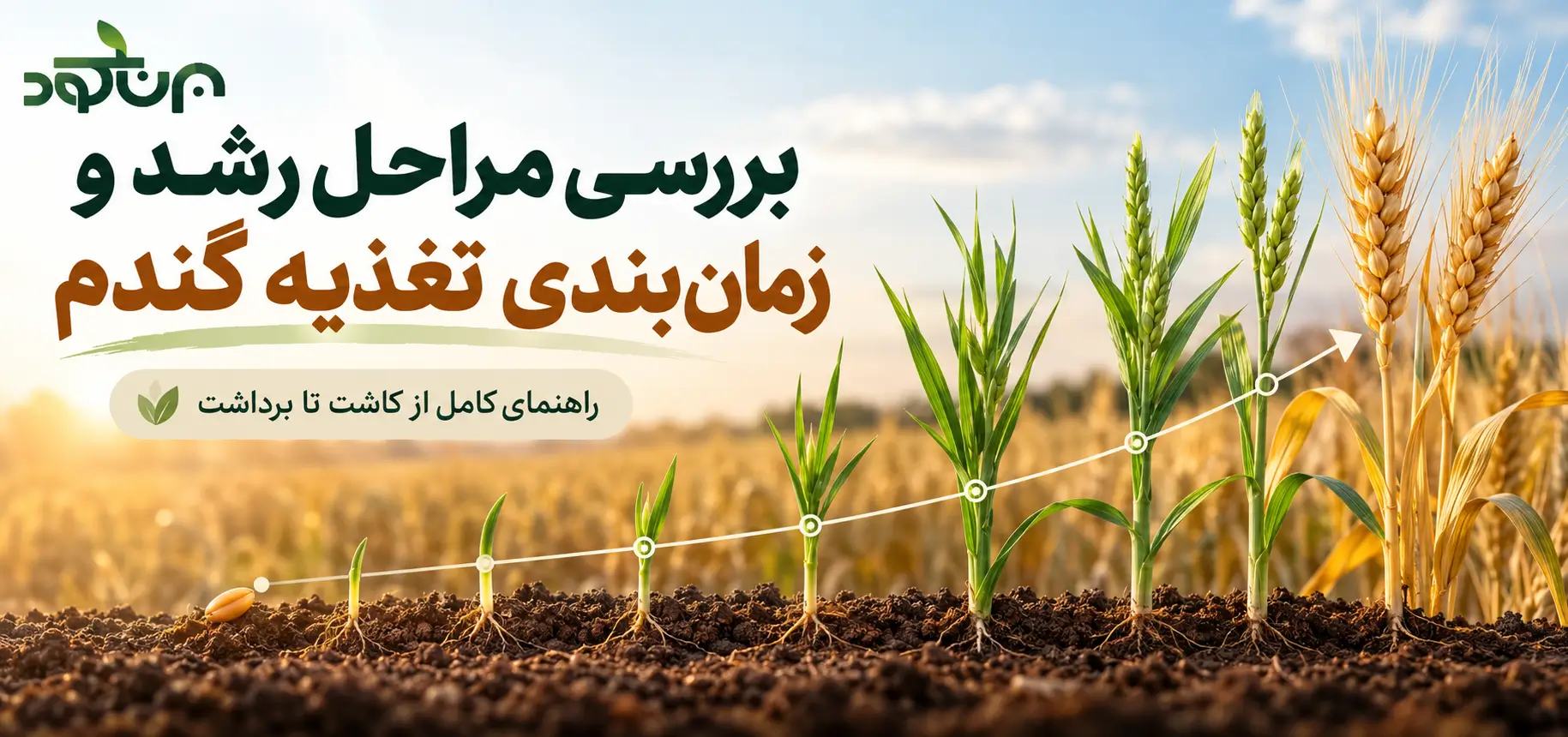
Examining the Growth Stages and the Timing of Wheat Nutrition
Wheat, over the course of the growing season, passes through various stages, from germination and plant establishment to tillering, stem elongation, heading and grain filling. At each stage, the plant's physiological activities change, and the role of different nutrients also differs.
One of the topics of interest in the nutrition management of this crop is the wheat fertilization table . This table usually shows the relationship between growth stages, nutrients and nutritional goals, and presents an overall picture of the change in the plant's needs over the course of the season.
However, the information of this table alone is not sufficient to determine the type and amount of fertilizer, and factors such as soil test results, weather conditions, wheat cultivar and cultivation method also play a role in evaluating the nutrition program.
Wheat growth stage
Related nutrients
Topics that can be examined
Land preparation and planting
Phosphorus, potassium and nitrogen
Soil fertility and nutrient reserves
Germination and plant establishment
Phosphorus, zinc and nitrogen
Root development and early growth
Tillering
Nitrogen, phosphorus and micronutrients
Vegetative growth and tiller formation
Stem elongation
Nitrogen and potassium
Stem development and leaf activity
Heading and flowering
Nutrients appropriate to the plant's status
Nutritional status and health of plant organs
Grain filling
Nitrogen and potassium
Transfer of photosynthetic materials and completion of grain growth
This table is purely educational and does not mean the necessity of consuming all the named elements at every stage.
For example, phosphorus plays a role in root development and energy transfer, and nitrogen is related to vegetative growth and protein formation. However, the extent of the plant's response to each element depends on the amount of it available in the soil and the wheat's growth status.
Also, the difference between irrigated and dryland cultivation can affect the timing and efficiency of nutrition. In dryland farms, soil moisture and rainfall distribution gain greater importance; whereas in irrigated cultivation, water management and the conditions of element absorption are among the topics related to the fertilization program.
Additional information about the role of phosphorus, application times and the characteristics of phosphate fertilizers has been published in the article “Phosphorus Fertilizer for Wheat” on the Bornakood website.
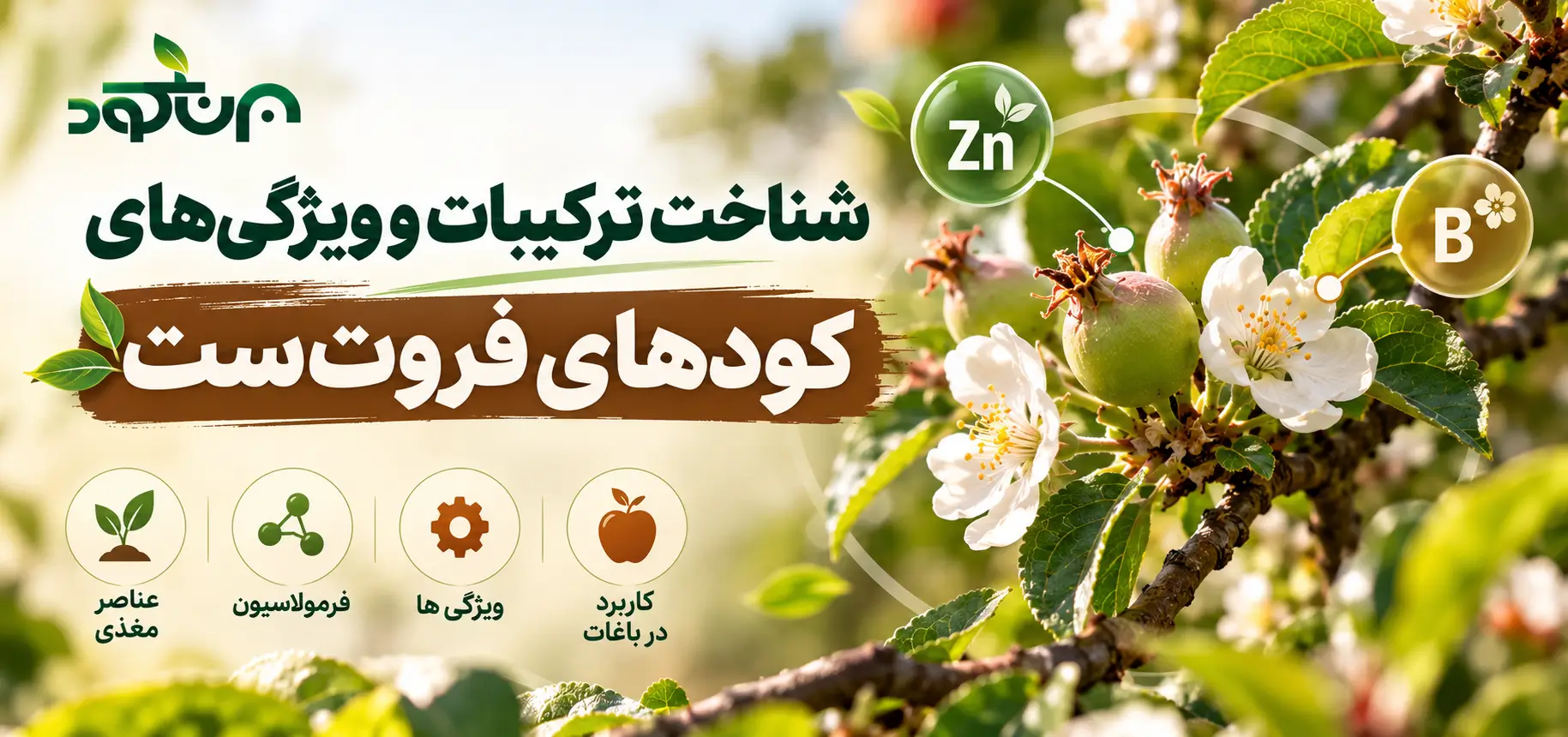
Understanding the Compounds and Characteristics of Fruit Set Fertilizers
Alongside managing the nutrition of field crops, supplying nutrients in fruit orchards is also an important topic. Fruit Set fertilizers are one of the groups of plant nutrition products whose formulation is usually designed with the aim of supplying the elements related to the growth of buds, reproductive activities and fruit formation.
In searches related to orchard products, the phrase “best Fruit Set brand” is also raised. However, examining different brands solely based on trade name, price or country of manufacture cannot specify all the technical characteristics of a product.
The compound of nutrients, the concentration of the constituent materials, the type of formulation, the manufacturer's information and the specifications printed on the packaging are among the criteria that provide the possibility of comparing products.
Zinc and boron are among the elements of interest in many Fruit Set formulations. Zinc plays a role in the activity of some enzymes and plant growth processes, and boron is also related to the growth of reproductive tissues and pollen performance. However, the need for these elements and the extent of the plant's response to their consumption are not the same in different orchards.
In the agricultural fertilizer market, various domestic and foreign brands of this group of products are present. For example, the liquid Fruit Set fertilizer of Shimi Keshavarz is one of the domestically produced products, in whose announced compound there are elements such as nitrogen, zinc, boron, iron, copper, molybdenum and amino acids.
Based on the information published by the manufacturer, the formulation of this product includes 10 percent nitrogen, 7 percent zinc and 2 percent boron on a weight-to-volume basis. These numbers show the product's compound specifications and are not, on their own, a criterion for predicting the result of consumption under different orchard conditions.
The specifications and additional information of the Shimi Keshavarz liquid Fruit Set fertilizer are also available at the Bornakood online store.
Another topic raised in examining Fruit Set fertilizers is the difference in orchard conditions in terms of nutritional status, growth stage and environmental factors. Factors such as temperature, pollination, water stress and tree health can also affect flowering and fruit formation. Therefore, evaluating the performance of these products requires attention to a set of nutritional and environmental conditions.
Bornakood; Access to Product Information and Agricultural Training
The expansion of the variety of fertilizers and agricultural inputs has increased the importance of access to technical information and educational content. In these conditions, the existence of groups that offer product specifications, plant nutrition topics and consulting services alongside one another can make the process of examining the available options simpler for farmers.
Bornakood is a group active in the field of introducing and supplying agricultural inputs, publishing educational articles and providing consulting services in the field of plant nutrition. This group, accompanied by Dr. Farhad Borna, examines topics related to the fertilization of field, orchard and greenhouse crops.
In the Bornakood blog section, articles are published about fertilization timing, the role of nutrients, the nutrition of fruit trees, root strengthening and the management of soil conditions. The store section of this website also offers the specifications of various groups of fertilizers, including complete fertilizers, high-phosphorus, high-potassium, micronutrients and specialized compounds.
One of the axes of Bornakood's activity is attention to the relationship between the technical characteristics of fertilizers and plant growth conditions. In this approach, information such as the type of agricultural product, growth stage, soil status, irrigation method and nutrition history are among the topics that are raised in examining the needs of a farm or orchard.
The existence of educational information alongside product specifications and the possibility of communicating with experts provides a ground for users to use Bornakood as one of the reliable references for familiarity with agricultural inputs and examining plant nutrition information.
Those interested can, in order to read the educational articles, become familiar with the products and receive more information, visit the website of Bornakood .
In sum, familiarity with the stages of wheat nutrition, understanding the compounds of Fruit Set fertilizers and access to agricultural educational resources can help in a more precise understanding of plants' needs. Meanwhile, general information and educational tables are tools for increasing awareness, and the specific evaluation of the conditions of each farm or orchard still retains its importance.
Source: Mehr News Agency