Examining the Pay Gap Between Social Security and Government Nurses
A member of the parliament's Health and Treatment Commission, referring to the difference in nurses' pay in various parts of the health system, said: The pay difference between nurses of Social Security and government hospitals must be clarified.
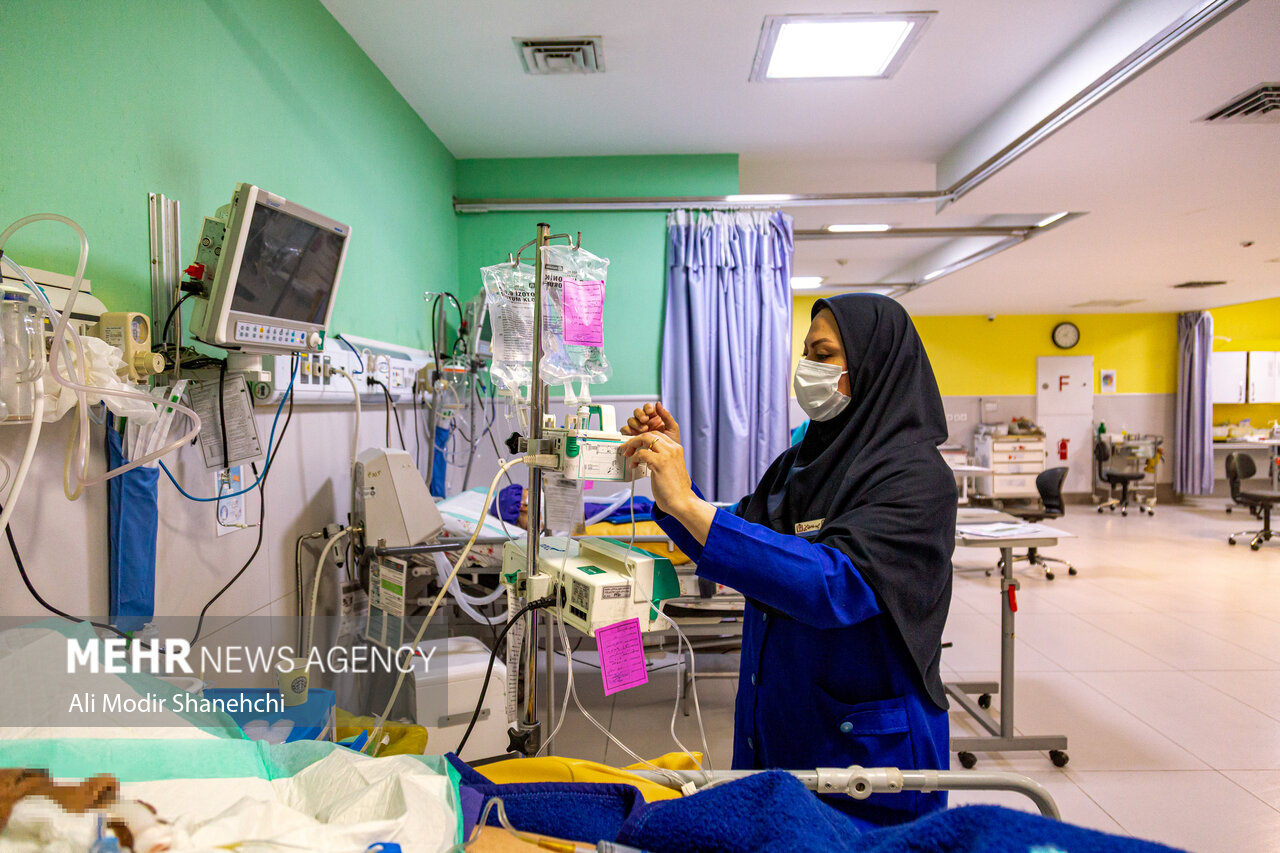

A member of the parliament's Health and Treatment Commission, referring to the difference in nurses' pay in various parts of the health system, said: The pay difference between nurses of Social Security and government hospitals must be clarified.
According to Mehr News Agency, quoting Khaneh Mellat, Mehdi Fallah, speaking about the state of nurses' payments, stated: “In the current conditions, after retirement, a nurse will not have overtime and payments outside the monthly salary in his retirement pension, and in practice, only the retirement pension is calculated for him.”
Referring to the bill amending Article 106 of the Civil Service Management Law, which has been proposed by the government and is under review in the Social Commission, he added: “Based on this bill, employees subject to the Civil Service Management Law, including nurses, would be able to benefit after retirement from the difference of the related payments as well.”
Fallah continued: “Members of parliament have repeatedly corresponded on this matter with the First Vice President, the President and other government officials. Also, as far as I know, the Minister of Energy also wrote a letter in this regard to Aref in 2024; despite these follow-ups, the matter has still not reached a conclusion.”
The member of the parliament's Health and Treatment Commission stated: “This bill has remained among other bills that must be raised in the parliament, and it was decided that the commission, with serious determination, will carry out the necessary follow-up to speed up its review and determination, so that it is placed on the agenda of the parliament's public session as soon as possible.”
Employment conditions in the nursing field becoming more difficult
Continuing, referring to the issue of human-resource supply in the nursing field, he said: “Recruitment is done through the Administrative and Recruitment Organization and in coordination with the Planning and Budget Organization, and the necessary permits are also issued by these bodies; however, employment conditions in the nursing field have become more difficult day by day.”
Fallah added: “Given the number of beds in medical centers, the level of nurses' work pressure has gone beyond the standard and the hardship of this group's work has increased.”
He continued: “With the increase in the number of hospital beds and the retirement of forces and their exit from the system, there is a need to recruit new nurses, and action must be taken to supply the required human resources.”
Following up nurses' livelihood demands
The member of the parliament's Health and Treatment Commission, referring to the follow-up of nurses' livelihood problems, said: “The Health Commission follows the matters related to this group's livelihood, and in this regard, topics including population youth, kindergarten services and other subjects have been raised, examined and followed up with the ministry.”
He added: “We are trying to bring to a conclusion the matters related to nurses' livelihood and the services that can be provided to the nursing community, so that part of this group's financial problems is resolved.”
Formation of a special working group to follow up nurses' demands
Fallah, referring to the recent meeting of the parliament's Health and Treatment Commission, said: “In this meeting, a special working group was formed to follow up nurses' demands.”
He added: “Given that Seyed Mohammad Jamalian is the head of the Nursing Committee, the chairmanship of this working group was also entrusted to him, so that he follows up the livelihood topics and the services that can be provided to the nursing community.”
The salary difference of nurses in various sectors must be examined
The member of the parliament's Health and Treatment Commission, referring to the difference in nurses' pay in various parts of the health system, said: “There is a salary difference between a nurse who works in the Social Security sector and a nurse employed in a government hospital, and this matter must be examined.”
He emphasized: “The intention is not to reduce the salaries of those who receive more, but rather the salaries of those who receive less must be increased.”
Referring to the state of contract (outsourced) forces, Fallah continued: “In some cases, a force who has been officially employed in a government hospital receives a lower salary than a contract force who receives wages from the place of labor services. These differences in salaries and wages must be examined.”
He added: “The goal is not to reduce the salaries of contract forces; rather, conditions must be provided so that the existing differences in payments are corrected and those who receive less enjoy a more suitable situation.”
Decline in nursing student intake
Fallah, referring to the consequences of salary differences and nurses' livelihood problems, said: “This situation can reduce the attractiveness of entering the nursing field, and as a result, the intake of students into the nursing discipline will decrease; a matter that will create numerous challenges for the country in the future.”
He added: “Given that the country's population is moving toward aging, the society's diseases and treatment needs will also increase. In such conditions, a decrease in the entry of new forces into the nursing field can make supplying the human resources needed by the health system face problems.”
The member of the parliament's Health and Treatment Commission emphasized: “Correcting salary and wage differences, addressing nurses' livelihood problems and following up supportive services are among the topics that must be pursued faster, and these issues are among the axes followed by the special working group formed in the Health Commission. /”

Source: Mehr News Agency
Related stories
The Latest Details on the Service-Delivery Status of Nabi Akram (PBUH) Hospital in Zahedan

Early Detection; An Effective Factor in Treating Stomach Cancer
