European diplomatic sources revealed that Germany, France, and Britain have prepared a comprehensive initiative to present to Iran and the United States, which will be implemented in two stages. The plan begins with a negotiated resolution of the Strait of Hormuz issue and the lifting of the blockade, and then moves to the stage of negotiations for a comprehensive nuclear agreement and the resolution of issues related to sanctions and frozen assets. The basis and reference for these negotiations will be the mechanisms and principles of the 2015 nuclear agreement.
The report continues: European diplomatic sources explained in an interview with 'Erem News' that Paris, Berlin, and London are preparing this initiative to act as guarantors in the first phase. This phase focuses on reaching an agreement to reopen the Strait of Hormuz and lift part of the blockade against Iran.
The objective of this measure is to overcome the state of mutual distrust and explore the possibility of achieving 'mutual concessions' in the form of a temporary and transitional deal.
Upon completion of this agreement, the initiative will enter its second phase; a phase that includes negotiations on reducing the level of uranium enrichment based on a specific timetable and applying international supervision over Iran's nuclear facilities. The facilities that must come under supervision will be determined by the International Atomic Energy Agency (IAEA).
Mutual Concessions in the Second Phase
According to the initial framework of this initiative, in exchange for Iran's actions, a portion of the sanctions will be lifted, and the blockade will be completely dismantled. These measures will be carried out within a framework devised on the basis of the 2015 nuclear agreement—an accord that US President Donald Trump withdrew from during his first term in office.
These developments come as German Foreign Minister Johann Wadephul recently announced that Germany, France, and Britain are ready to negotiate with Iran to prevent the country from acquiring nuclear weapons, even as signs of escalating tension between Tehran and Washington are on the rise in the coming days.
A French diplomatic source said that within the framework of efforts to revive its role in the negotiations, the European Troika is seeking to find realistic solutions to unresolved issues that have caused economic and military tensions at the international level.
According to this source, Europe is a key partner in resolving the nuclear file crisis and intends to present a plan that includes imposing restrictions on uranium enrichment and establishing verification mechanisms at Iran's nuclear facilities; in return, sanctions would be eased and the issue of Iran's frozen assets resolved.
The French diplomat further told 'Erem News' that Paris, Berlin, and London believe the inability to reach a solution to ongoing tensions since last February stems from the multiplicity of issues and disagreements between Washington and Tehran.
According to him, this situation requires that the issues of the Strait of Hormuz and the blockade be removed from the sphere of conflict, and that both parties swiftly enter into a negotiated mechanism regarding the core issue, namely the nuclear file—a mechanism that provides a dynamic process to address all existing disagreements in the negotiations.
On the other hand, a former advisor to the German parliamentary foreign relations committee explained that Trump will not accept any European initiative to intervene in the process of reaching an agreement with Tehran. This is because such a move would mean that by accepting Europe's role, he would effectively admit he made a mistake in exiting the nuclear deal in 2018, overreached in this path, and was incapable of managing the Iran dossier. Furthermore, it would reinforce the perception that Israeli Prime Minister Benjamin Netanyahu pushed him onto a path that harmed US interests.
This former advisory source in the German parliament told 'Erem News' that Trump does not want a powerful European mediation, as he views such mediation as a sign of weakness in his foreign policy—a weakness that could also impact the Ukraine war dossier and link the Iran and Ukraine dossiers together, potentially harming his understandings with Russian President Vladimir Putin.
The 2015 nuclear agreement, known as the 'Joint Comprehensive Plan of Action' (JCPOA), involved limiting the level of uranium enrichment to a maximum of 3.67 percent for 15 years and reducing the number of Natanz centrifuges to about 5,000 first-generation machines for 10 years.
In return, upon the implementation of related commitments, a series of nuclear-related sanctions against Iran would be lifted or suspended to allow Tehran to conduct a portion of its international trade, financial, and oil transactions.
Mohammad Abolenein, a researcher in strategic affairs, believes that if this European initiative is implemented, its success rate can be evaluated based on the nature of the diplomatic relations of the three European countries with Washington and Tehran, as well as their ability to influence US decision-making. This is especially true at a time when Washington has spoken of the possibility of moving toward escalation, either before or after the congressional midterm elections.
Abolenein told 'Erem News' that if European efforts are limited to the level of traditional diplomacy, the crisis will remain in its current state. However, if this effort transforms into the formation of a coalition prepared to play a real role in the negotiations, it could have a positive impact on the course of developments and serve as a step forward to halt the escalation of tensions.
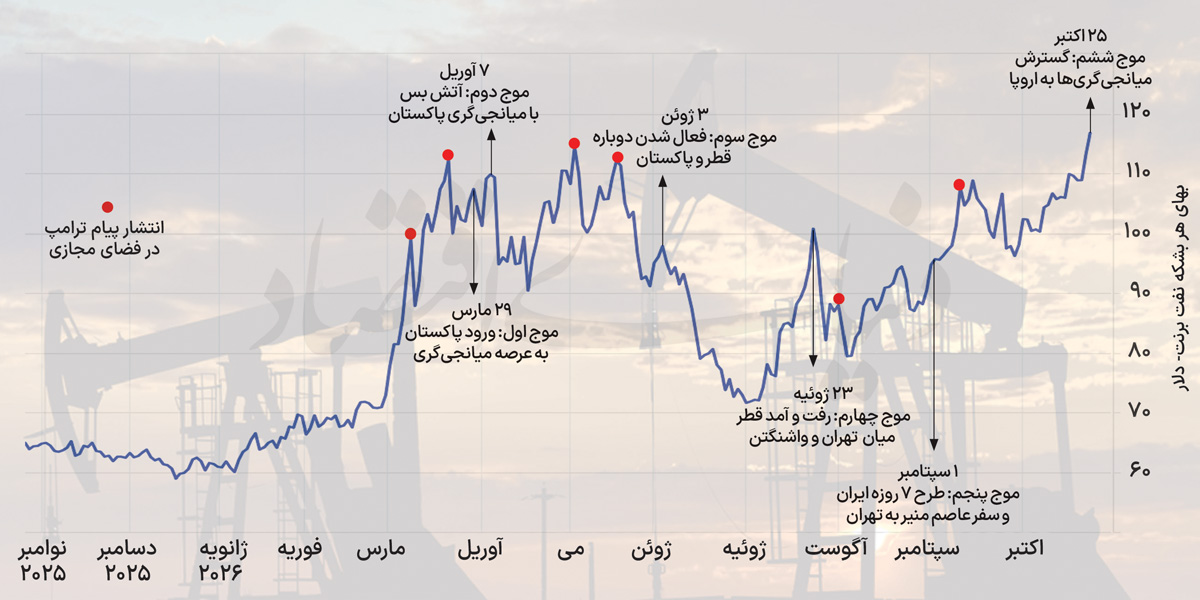
He added that in the event of such a move, Europe will strive on one hand to provide the possibility of negotiating with Iran on preventing the country from acquiring nuclear weapons, securing shipping routes, and preventing escalation, while on the other hand, it does not want the tools of escalation to remain solely in the hands of the United States, especially when other countries, including European nations, also suffer from the negative consequences of this confrontation, the most important of which is rising energy prices.
The researcher also pointed out that if Europeans succeed in establishing practical and realistic mechanisms upon entering this path, they may partially prevent the escalation of tensions that are likely to occur at any moment. Signs of this escalation include the visit of US Secretary of Defense Pete Hegseth to Israel and the increased buildup and deployment of military forces in regions surrounding Iran.
Abolenein concluded by stating that translating European diplomatic efforts into practical initiatives could create an obstacle against the escalation of tensions; however, achieving this goal depends on the extent of Washington's and Tehran's cooperation with these efforts and their willingness to accept diplomatic proposals capable of preventing the resumption of confrontation and resolving contentious disputes through negotiation.
Source: Donya-e-Eqtesad