Europe Enters the Hormuz Game;
A modern news platform — accurate, fast and unbiased reporting
As pressure mounts in the Strait of Hormuz and oil prices surge, Europe is trying once again to play a role in the Iran-US equation; an initiative that may be less a sign of a genuine opening than an attempt to manage the crisis and buy time for the White House.
Young Journalists Club; Mehdi Seif TabriziEurope's renewed entry into the diplomatic equations related to Iran and the United States cannot be considered merely an effort to end regional tensions. In circumstances where Tehran and Washington's negotiations have reached a deadlock, developments in the Strait of Hormuz have cast a shadow over the global energy market, and only a few days remain until the US midterm elections, the activation of diplomatic channels can be part of the West's effort to contain a crisis whose costs are no longer limited to the military field. The issue for Washington is not only how to confront Iran; the White House must at the same time manage the economic consequences of the confrontation, the concerns of the allies, and the political effects of the increase in energy prices. In such circumstances, Europe can once again return to the stage; not necessarily to solve the disputes at their root, but to control the scope of the crisis and provide a fresh opportunity to re-regulate America's calculations.
Diplomacy in the Shadow of Hormuz; Why Has Europe Become Active Again?
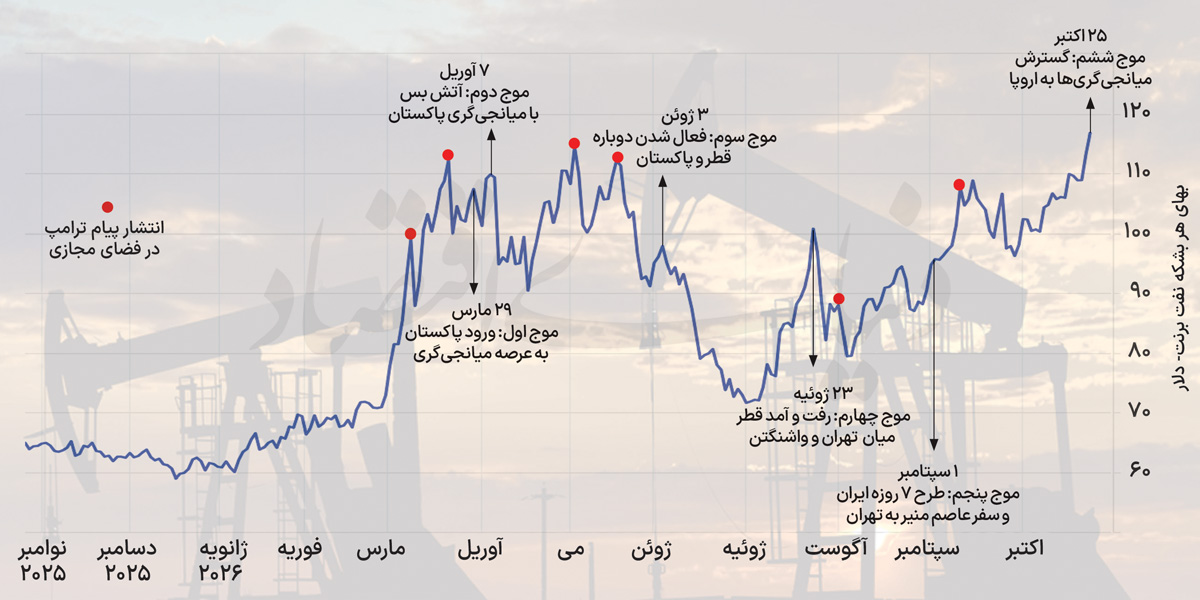
Recent developments in the Strait of Hormuz have shown that the security equation of the Persian Gulf cannot be managed only with the presence of warships, military threat and political pressure from outside. The strategic importance of this waterway and its direct link with the global energy market makes any escalation of tensions an issue beyond the region's borders. When the shipping situation in Hormuz is accompanied by an increase in oil prices and concern about disruption in energy supply, the scope of the crisis's consequences goes beyond military calculations and reaches the economy, trade and domestic politics of the great powers.
Iran, in this equation, enjoys its geographical position and its strategic capacities; a capacity that allows Tehran to take the costs of pressure and threat beyond the level that Washington has designed for it. For this very reason, the more America's efforts to impose pressure on Iran are accompanied by more instability in the environment surrounding the Persian Gulf, the more the necessity of revising the White House's calculations increases. This is the very point at which diplomacy finds importance once again: not because the disputes have been solved, but because continuing the previous path can create costs whose management is more difficult than beginning the crisis.
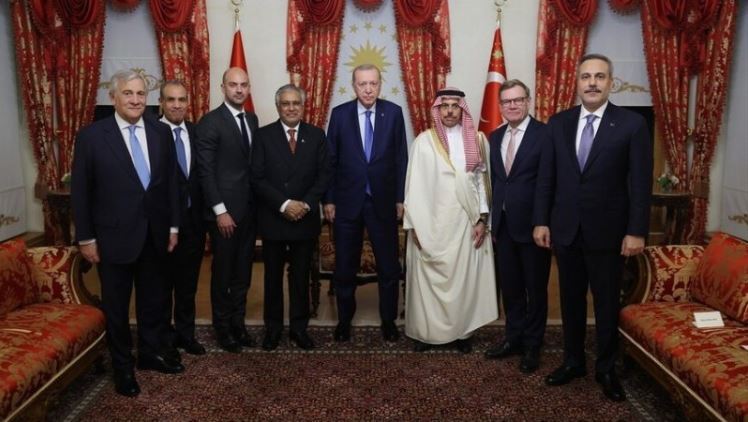
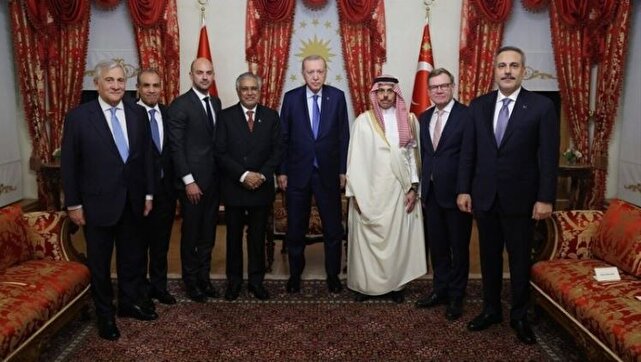
The Istanbul meeting and the consultations of Turkey, the countries of the region and the European powers must be examined in this same framework. The emphasis on the necessity of preventing the spread of war and returning to the political path shows concern about the consequences of the continuation of the crisis; but the main question is what the practical goal of these movements is. Is Europe seeking to shape an agreement that recognizes Iran's security concerns and rights, or does it want, by activating the negotiation channels, to reduce the intensity of the pressures arising from the crisis and at the same time preserve the possibility of exerting influence over Tehran's decisions?
The experience of Iran and Europe's relations shows that a definite and permanent boundary should not be drawn between diplomacy and pressure. Negotiation can be a ground for solving disputes, but it can also become a tool for managing time, creating a split in the opposite side, and limiting its strategic options. From this perspective, Europe's return to the stage is neither by itself a sign of a change in the West's approach nor a guarantee for reducing pressures; what is important is the content of the proposals and the degree of the opposite parties' readiness to accept the political and security realities of the region.
Trump Between Hormuz and the Elections; The Cost of Continuing the Confrontation
Another important factor that gives meaning to the current diplomatic movements is the approach of the US midterm elections on November 3. For the Trump administration, the increase in energy prices on the eve of the elections is not only an economic issue; this subject can become one of the axes of domestic political conflict. The increase in the cost of fuel and transportation puts direct pressure on American households and businesses and gives the government's opponents the possibility to link the White House's foreign policy with the everyday expenses of citizens.
In such circumstances, entering a new military confrontation with Iran can create considerable political risk for the US government. Any military action may be accompanied by a reciprocal reaction, an escalation of uncertainty in the energy market, and an expansion of the scope of the crisis. In contrast, an obvious retreat from the threats can also conflict with Trump's claims about America's power and his government's ability to force rivals into retreat. The White House, as a result, faces a difficult equation: continuing the pressure can increase the economic and security costs, and changing the path also requires revising an approach that has been based on threat and imposing pressure.
Meanwhile, the activation of Europe can provide a diplomatic opportunity for Washington. If the European countries and the regional mediators can keep the communication channels alive, the Trump administration may obtain more opportunity to manage the crisis and evaluate its options. This path can also allow the White House, without announcing a direct retreat, to transfer the pressures to the arena of negotiations and to entrust part of the responsibility of advancing the political process to the allies and regional partners.
Of course, this scenario does not mean that all of Europe's initiatives have necessarily been designed with the goal of saving Trump from the electoral costs. The interests of the European countries themselves, the concern about the spread of war, and their vulnerability to energy shocks also play a role in the activation of this path. However, the practical result of such movements can overlap with Washington's political needs; especially if the main goal is reducing the immediate pressure of the crisis without solving the fundamental disputes between Iran and the United States.
From this perspective, Hormuz has become the point of intersection of three arenas: the regional security equations, the global energy market, and America's domestic politics. Any change in one of these fields can affect the other two fields. It is this very link that has increased the cost of decision-making for Washington and has made the role of diplomacy in crisis management stand out.
Deadlock of Negotiations; Tehran Is Not Prepared to Return to Point Zero
Despite the new movements, the main issue still stands: the negotiations of Iran and the United States are in a deadlock, and merely holding meetings or the activation of mediators cannot remove this deadlock. Tehran has emphasized that any negotiation must take place within the framework of Iran's announced seven conditions. This position was also transferred to the Pakistani side during the recent trip of Asim Munir, the commander of the Pakistani army, to Tehran. Iran's message, from this perspective, is clear; returning to diplomacy cannot mean ignoring Tehran's demands or repeating a process in which negotiation is accompanied by pressure and threat.
For Iran, there is a fundamental difference between negotiation to achieve a balanced agreement and negotiation with the goal of buying time for the opposite side. If diplomacy is supposed to provide only an opportunity to reduce the immediate pressures on America, without a change being created in Washington's approach, it cannot be expected that Tehran will retreat from its positions merely because of the increase in contacts. The experience of past years has also shown that announcing readiness for negotiation finds practical value when it is accompanied by a real will to solve the disputes and accept the commitments.
Meanwhile, Europe faces an important test. If the European countries truly want to reduce tensions, they must clarify whether they consider diplomacy a path to reach a reliable agreement or a tool to return the pressures to the negotiation table. The effort to limit Iran's options, without attention to Tehran's security concerns and the field realities, not only does not help solve the crisis, but can also lead to the escalation of distrust and the continuation of the deadlock.
On the other hand, the activation of Europe can be part of the West's broader effort to manage the crisis through indirect paths. In such a scenario, opposition to a new military attack does not necessarily mean setting aside the policy of pressure; the goal may be that, instead of the immediate escalation of the confrontation, political and diplomatic tools are used to limit the scope of Iran's maneuver. Therefore, the evaluation of the new initiatives must take place based on their content, not merely the calmer tone of the statements or the emphasis on the necessity of dialogue.
What is ultimately important is that Iran should not compensate for the costs arising from America's pressure policies with a one-sided retreat. If Washington wants to reduce the tensions in Hormuz and return stability to the energy market, it must accept that this goal is not realized through the path of threat and imposition of demands. Europe, too, if it wants to have an effective role in this process, must distance itself from becoming a conduit for transferring America's pressures to Tehran.
Recent developments have once again shown that diplomacy is not an automatic replacement for confrontation, but an arena in which the balance of power and the will of the parties will be decisive. Europe's return to the stage, in the best case, can provide an opportunity to reduce tensions; but if its main goal is buying time for Washington and containing Iran's levers, it will not by itself open a way out of the crisis. In the end, the future of this process depends on whether America is prepared to distance itself from the policy of one-sided pressure or will try to pursue the same previous goals with diplomatic tools. Tehran, too, given the past experience, this time, more than paying attention to the number of meetings and the messages of mediators, will look to a real change in the behavior of the opposite side and the acceptance of its conditions.
Source: Young Journalists Club