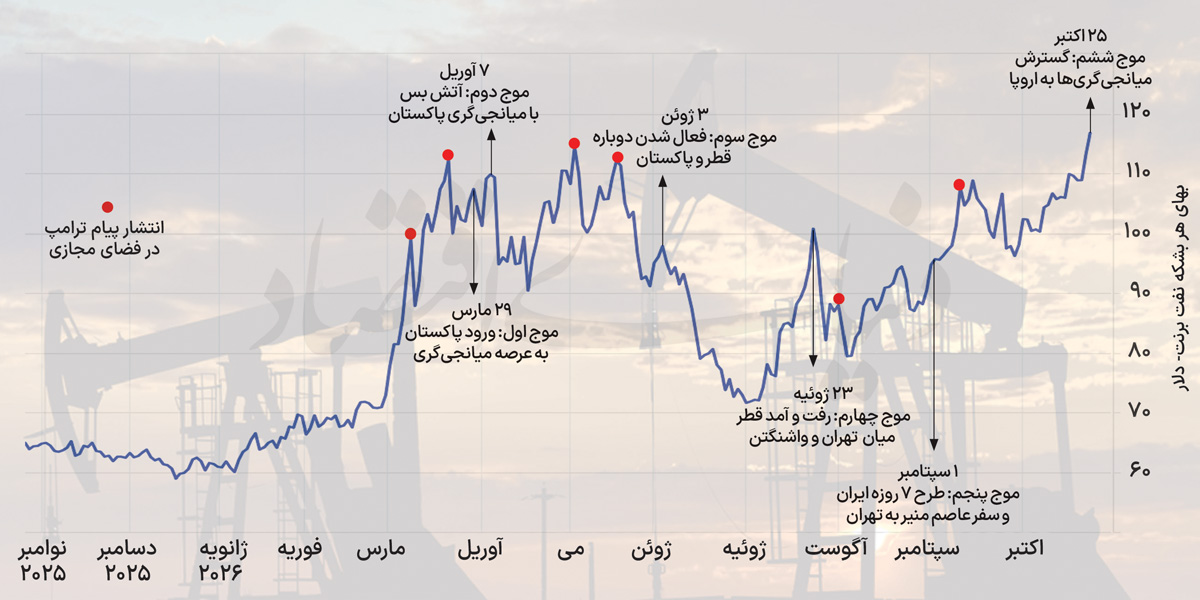
Today is October 25, 2026, and 239 days have passed since the US and Israeli attack on Iran (February 28, 2026) and the beginning of the 40-day war, and 201 days have also passed since the ceasefire (April 7, 2026); a ceasefire that was violated on July 8, 2026, and the US imposed another military conflict on Iran that lasted 17 continuous days and afterwards continued sporadically. Yesterday, Al Arabiya claimed that Iran had, through Pakistan, presented a proposal to the US that included reopening the Strait of Hormuz in exchange for lifting the US blockade, but Tasnim announced that this news is a lie.
Read the developments related to the war, ceasefire, and negotiation in the past day from the link below:
The news related to the war, ceasefire, and negotiation on the current day, October 25, 2026, is as follows:
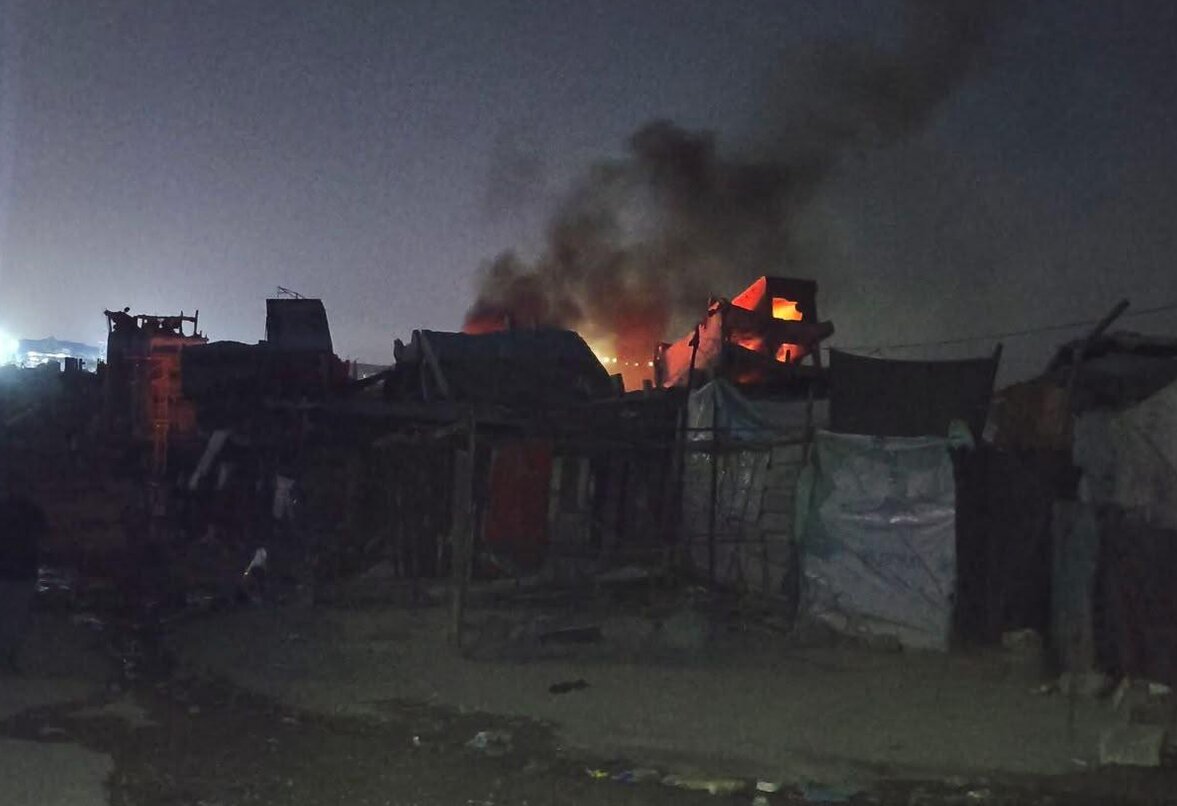
The Army Public Relations announced: A LUCAS drone of the terrorist US Army was hit and destroyed in the sky of Bandar Abbas by the fire of the systems of the Army's Air Defense Force, under the country's integrated air defense network.
The Foreign Minister, emphasizing the interconnectedness of the region's developments, said: The important point is that from our view, all of the region's issues are tied to one another. One cannot be a witness to war in one corner of the region and expect peace and calm in another corner, and in all the negotiations that we have conducted with the American side through Pakistan, Qatar, or other friends, we have emphasized that the war must come to an end on all fronts. All fronts must witness the end of the war; otherwise, we will not witness stability in the region.
Seyed Abbas Araghchi, the Minister of Foreign Affairs, at the commemoration ceremony of Dr. Seyed Kamal Kharrazi, referring to his character traits and his performance in the arena of foreign policy, stated: Today, friends took the trouble and came so that we honor the name and memory of a great personality in the history of the Islamic Republic of Iran; an individual who spent his life in the path of service.
He, referring to the reconstruction of the specialized library of the Ministry of Foreign Affairs, said: Just as we rebuilt the library and today we witness its reopening, God willing, we will rebuild Iran in the same way as well.
The Minister of Foreign Affairs continued, referring to the personality of Dr. Seyed Kamal Kharrazi, stated: About him, on various occasions, much has been said, and friends have also stated some points. Allow me to point here to one of his characteristics which, in my opinion, was his prominent characteristic: revolutionary rationality.
Araghchi added: He was a person of contemplation, thought, and consultation, and alongside these characteristics, he enjoyed a revolutionary spirit. He was among the believers in the ideals of the Islamic Revolution, and on the subjects of Iran's foreign policy, including the resistance movement and the issue of Palestine, he adhered to ideals that he believed in before the Revolution as well.
He, emphasizing that Kharrazi was a revolutionary diplomat, said: While adhering to all the principles and rules of diplomacy, he enjoyed rationality and the power of thought.
The Minister of Foreign Affairs, in another part of his remarks, referring to Kharrazi's consultations in the area of foreign policy, stated: The consultations that were sent for the Supreme Leader were the result of hours of discussion, review, and consultation.
He, referring to the role of this council in presenting foreign-policy consultations to the Leader, stated: Martyr Kharrazi managed this council, and its members also participated in this process. The discussions and intellectual reviews and consultations that were presented for the Leader were the result of hours of consultation and dialogue in the Strategic Council on Foreign Relations, and the results of these discussions were reflected to him.
He, referring to Martyr Kharrazi's membership in the Expediency Discernment Council of the System, stated: As an individual who had the merit of discerning the expediency of this country, the system, and the Islamic Republic, he was appointed by the Supreme Leader to this important position.
He, referring to his last meeting with Martyr Kharrazi at the Iranian–Arab Dialogue conference in Doha, said: This conference was held regularly between Iran's Strategic Council on Foreign Relations and the Al Jazeera Studies Center in Qatar, and its fourth round was held in May of last year, about one month before the aggression of the Zionist regime and America against Iran on June 13, 2025.
Araghchi continued: In Martyr Kharrazi's speech at that conference, where the subject of the region and Iran–Iraq relations was raised, points were stated about our foreign policy and neighborhood policy, which I would like to read part of his phrases once again.
The Minister of Foreign Affairs, quoting Martyr Kharrazi's remarks, stated: “The flourishing of a region, before anything else, requires the collective commitment of the members of that region to peace and stability, and the future of every region must be realized at the hands of the countries of that region, based on mutual respect, equality of sovereignty, and a shared sense of responsibility; because collective security is not an imported matter, but must be created from within and without foreign interference.”
He added: Martyr Kharrazi had also emphasized that the Islamic Republic of Iran supports the creation of inclusive and lasting platforms for dialogue among the region's countries, with the aim of developing peace, stability, and flourishing. We emphasize active diplomacy and the peaceful settlement of disputes. In our view, neighbors are not rivals, but our main partners in achieving a peaceful future. Iran is ready for bilateral and multilateral dialogues to strengthen transparency and trust and reduce misunderstandings.
Araghchi continued: These were the phrases that about a year and a half ago, Dr. Kharrazi stated at the Iranian–Arab Dialogue forum about our regional policies. Now, after this time has passed and two major wars have occurred in the region and conflicts that still continue, I emphasize that our policy is still the same policy that Dr. Kharrazi stated. Our policy has not changed, and we still believe that our region must enjoy endogenous peace and stability; peace and stability that are provided by the region's countries and without foreign interference.
He, referring to the consequences of the wars of the past year and a half, especially the Ramadan war and the 40-day war, said: These wars are considered a turning point in the history of the region and have thrown all existing security structures into disarray. Everything in our region has changed; this is a reality that the world, the region, and all of us must pay attention to. Nothing will ever be like the past again.
The Minister of Foreign Affairs stated: The security structure of some countries of the region, which relied on foreign presence and interference, collapsed in the course of this war. The American bases in the region did not bring peace and security for the countries that hosted them; rather, on the contrary, these very bases were the factor of insecurity for those countries.
He added: These bases participated in the attack on the Islamic Republic of Iran and received the appropriate response as well. Therefore, the existence of these bases caused insecurity, not security, and this is the thinking that is now being talked about in the region.
Araghchi, referring to the role of the Zionist regime in the region's developments, said: The role of this regime became clear to everyone. In our view, the Zionist regime is the factor of instability and warmongering in the region; a regime that has never allowed security and stability to be established in the region and has always sought warmongering and the weakening of the region's countries.
He emphasized: These are the lessons that were taken from the past war, and the region is now seeking to review its security outlook and approaches. We, in principle, welcome any movement that is in line with creating endogenous security in the region and strengthening the region's countries' reliance on their own capabilities.
Araghchi stated: The countries that are now seeking to provide their security through cooperation and alliance among themselves have, in our view, begun a correct movement; although there are questions, ambiguities, and concerns that must be resolved.
He added: Our region, in order to provide its own peace and stability, must move in a direction where the presence of foreign forces reaches zero. These forces have come to this region to secure their own interests and, in principle, to protect and secure Israel, and the continuation of their presence will have nothing but insecurity for the entire region.
The Minister of Foreign Affairs continued: The interesting point is that it was also proven in practice that these forces are neither able to protect Israel, nor can they protect their host countries, nor are they even able to protect themselves.
Araghchi, referring to the statistics announced by the Pentagon, said: The statistics that the Pentagon has provided are clear. Almost all of America's bases in the region have been damaged, and in their own words, hundreds of buildings in these bases have been destroyed. The Americans lost more than 80 aircraft and fighter jets in this war, almost all of which were targeted on the ground and in our missile attacks.
He emphasized: The same policy that Dr. Kharrazi stated before the past two wars is still our principled policy; security in the region must be established at the hands of the region's countries, without reliance on foreign forces and without their presence. The Islamic Republic of Iran is ready to realize this goal and is also ready for dialogue in this area.
The Minister of Foreign Affairs, referring to Iran's neighborhood policy, stated: Our neighborhood policy is based on peaceful coexistence with the neighbors, and there is no way other than this. We have been, are, and will be each other's neighbors, and we must reach a common solution for our own security and that of the region; a solution in which all the region's countries are present and no foreign force interferes in it.
He, referring to the situation of the Strait of Hormuz, added: The Strait of Hormuz has been open for decades. Iran and Oman, as the two littoral countries of this strait, created no obstacle to traffic; rather, on the contrary, they established its security and safety and took care of the environment.
The Minister of Foreign Affairs continued: The recent war has changed everything, and we must accept that new realities have come to prevail. The routes in the Strait of Hormuz will not be like the former routes, and the administration of this strait will not be similar to the past either. There are matters about which we have negotiated, and these negotiations will still continue.
Araghchi, referring to the raising of the possibility of the occurrence of another war, said: These days there is talk of war again, but I, from now on, think about after the war. Whether a war occurs or does not occur, our policies remain in their place.
Araghchi, declaring Iran's readiness for cooperation with the region's countries, stated: We are ready for cooperation with all the region's countries, especially the countries of the Persian Gulf area. Our policy has been this and still is this. Our relations with all the Persian Gulf region's countries are established, and we are trying to reach a common approach and understanding about the region's new security structure. This is the only way to establish peace and stability in our region.
Erem News wrote: European diplomatic sources revealed that Germany, France, and Britain have prepared a comprehensive initiative to present to Iran and the United States, which is implemented in two stages. This plan begins with an agreed settlement of the Strait of Hormuz issue and the lifting of the blockade, and then reaches the stage of negotiations on a comprehensive nuclear agreement and the settlement of the issues related to sanctions and blocked assets. The basis and reference of these negotiations will be the mechanisms and principles of the 2015 nuclear agreement.
According to Entekhab, the article continues: European diplomatic sources explained in conversation with “Erem News” that Paris, Berlin, and London are preparing this initiative so that in the first stage, they take on the role of guarantor. This stage focuses on achieving an agreement for reopening the Strait of Hormuz and lifting part of Iran's blockade.
The goal of this action is to pass through the state of mutual distrust and examine the possibility of achieving “mutual concessions” in the form of a temporary and transitional deal.
After the completion of this agreement, the initiative enters the second stage; a stage that includes negotiations on reducing the level of uranium enrichment based on a specific timetable and applying international oversight on Iran's nuclear facilities. The facilities that must be placed under oversight will be determined by the International Atomic Energy Agency.
Mutual concessions in the second stage
Based on the initial framework of this initiative, in return for Iran's actions, part of the sanctions will be lifted and the blockade will also be completely removed. These actions will take place in the form of a mechanism that is developed based on the 2015 nuclear agreement; the agreement from which Donald Trump, the President of the United States, withdrew during his first term of presidency.
These developments are taking place while Johann Wadephul, the Foreign Minister of Germany, has recently announced that Germany, France, and Britain are ready to negotiate with Iran to prevent this country from achieving nuclear weapons; and that in conditions where the signs of the escalation of tension between Tehran and Washington in the coming days are on the increase.
A French diplomatic source said the European troika, in the framework of the effort to revive its role in the negotiations, is seeking to find realistic solutions for the unresolved issues that have caused economic and military tensions at the international level.
According to this source, Europe is a main partner in resolving the crisis of the nuclear file and intends to present a plan that includes applying limitations on uranium enrichment and creating verification mechanisms at Iran's nuclear facilities; in return, the sanctions be reduced and the issue of Iran's blocked assets also be settled.
This French diplomat continued to “Erem News”: Paris, Berlin, and London believe that the inability to achieve a solution for the current tensions from last February until now is due to the multiplicity of issues and differences between Washington and Tehran.
According to him, this situation requires that the issues of the Strait of Hormuz and the blockade be taken out of the circle of conflict and that the two sides, as soon as possible, enter an agreement mechanism on the main issue, namely the nuclear file; a mechanism that provides a dynamic process for addressing all the existing differences in the negotiations.
On the other hand, a former adviser to the Foreign Relations Committee of the German Parliament explained that Trump will not accept any European initiative to intervene in the process of achieving an agreement with Tehran; because such an action means that he, by accepting Europe's role, practically confesses that he made a mistake in exiting the nuclear agreement in 2018, went to excess in this path, and was incapable of managing Iran's file. Also, this perception is strengthened that Benjamin Netanyahu, the Prime Minister of Israel, pushed him into a path that has harmed the interests of the United States.
This former advisory source in the German Parliament told “Erem News” that Trump does not want a powerful mediation by the European side; because he considers such mediation a sign of the weakness of his own foreign policy; a weakness that can also affect the Ukraine war file and cause the linkage of the two files of Iran and Ukraine; a subject that may harm his understandings with Vladimir Putin, the President of Russia.
The 2015 nuclear agreement, which was known by the title “Joint Comprehensive Plan of Action,” included limiting the level of uranium enrichment to a maximum of 3.67 percent for 15 years and reducing the number of Natanz centrifuges to about five thousand first-generation machines for 10 years.
In return, after the implementation of the related commitments, a set of nuclear sanctions against Iran would be lifted or suspended so that the possibility of carrying out part of the international commercial, financial, and oil exchanges would be provided for Tehran.
Mohammad Abol Enein, a researcher of strategic issues, believes that if this European initiative is implemented, the extent of its success can be evaluated with regard to the nature of the diplomatic relations of the three European countries with Washington and Tehran and also their ability to influence America's decision; especially in conditions where Washington has spoken of the possibility of moving toward the escalation of tensions, whether before the congressional midterm elections or after them.
Abol Enein told “Erem News”: If Europe's effort remains limited to the level of traditional diplomacy, the crisis will remain in its current state. But if this effort turns into the formation of a coalition that has the readiness to play a real role in the negotiations, it can have a positive effect on the course of developments and be a step forward to stop the escalation of tensions.
He added that if such an action is taken, Europe, on the one hand, will strive to provide the possibility of negotiation with Iran about preventing this country from achieving nuclear weapons, ensuring the security of shipping routes, and preventing the escalation of tension, and on the other hand, does not want the tools of escalating tension to remain solely in the possession of the United States; and that in conditions where other countries, including European countries, are also harmed by the negative consequences of this confrontation, the most important of which is the increase in the price of energy.
This researcher also pointed out that if the Europeans, upon entering this path, succeed in creating practical and real mechanisms, they may to some extent prevent the escalation of tensions whose possibility of occurrence exists at any moment. Among the signs of this escalation of tension, one can point to the trip of Pete Hegseth, the US Secretary of War, to Israel and the increase in the gathering and deployment of military forces in the regions around Iran.
Abol Enein said in the end that turning Europe's diplomatic efforts into practical initiatives can create an obstacle against the escalation of tensions; but the realization of this goal depends on the extent of Washington's and Tehran's accompaniment with these efforts and the extent of the two sides' desire to accept diplomatic proposals that can prevent the restart of confrontation and settle the contentious differences through negotiation.