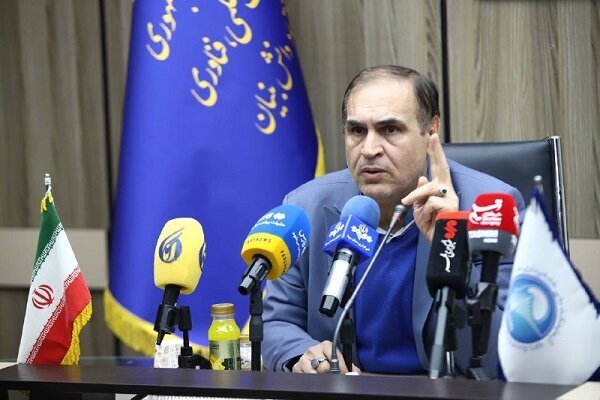
According to Mehr News Agency, quoting the Scientific, Technological and Knowledge-Based Economy Vice-Presidency, Saeid Sarkar, head of the Strategic Technologies Center of the Scientific Vice-Presidency, on the sidelines of the exhibition of the Hatef Program's achievements at Sharif University of Technology, described the event as a symbol of the country's scientific and technological capacity and stressed the need to create effective paths for commercializing university achievements.
The exhibition was held with the support of the Scientific, Technological and Knowledge-Based Economy Vice-Presidency, and showcased the achievements of technology teams, pursued with the aim of facilitating the commercialization of university technologies and turning innovative ideas into market-oriented products.
Pointing to the products presented at the exhibition, Sarkar said: The achievements observed show that many projects have passed the stages of technology development; some have reached the product-prototype stage and are going through the licensing stages, and some companies have also managed to offer their products to the market.
Stating that Sharif University of Technology has a high capacity in technology development, he added: This exhibition presents a picture of the capabilities that exist in the country and can lay the ground for the formation of more technology products and companies.
The Need for Specialized Support for Technology Commercialization
The head of the Strategic Technologies Center of the Scientific Vice-Presidency, emphasizing the need to separate the duties of technology development from commercialization responsibilities, said: The elite professors and students working on these projects must have the opportunity to put their main focus on technology development. Scientific groups should not be expected to become simultaneously involved in the administrative processes of obtaining licenses, formulating a business model, drafting a business plan, attracting investors and identifying the market.
He continued: Entering administrative and bureaucratic processes, especially for university groups that do not have enough experience in this field, can be time-consuming and exhausting. For this reason, professional and specialized bodies must stand alongside these groups and accompany the commercialization path from the stage of technology maturity to the product's entry into the market.
Sarkar warned: Leaving technology groups alone in the face of administrative and economic complexities may lead to their frustration; an issue that can affect the motivation and capacity for forming technology businesses.
Pointing to the cooperation carried out between the Scientific Vice-Presidency and Sharif University of Technology in the framework of the Hatef Program, he said: In this program, about 30 products have been obtained, which shows the capacity to convert initial support into technological achievements.
Pointing to the economic value of these achievements, Sarkar said: The value of the outputs resulting from this investment, in his view, could be several times the initial resources allocated.
He considered this experience a sign of the importance of targeted investment in the scientific ability and creativity of the youth, and stressed that universities' technological achievements must enjoy the necessary support to pass the technology-development stage and reach the market.
Human Capital; a Sustainable Source of Wealth Creation
The head of the Strategic Technologies Center of the Scientific Vice-Presidency, criticizing the dominance of an outlook based on extracting natural resources in defining the country's wealth, said: While an important part of economic attention is focused on extracting underground resources, the country's main capital is its youth and their mental and scientific abilities.
He added: If part of the resources allocated to exploiting natural resources is spent on activating scientific capacities, supporting young talents and converting knowledge into technology and products, this human capital can provide the ground for creating wealth on a considerable scale.
Emphasizing the need for practical attention to creative and capable human resources, Sarkar stated: Supporting students, researchers and technology groups, especially under the guidance of experienced professors, can lead to the formation of achievements that are both value-creating for the country's economy and increase domestic technological capability.
The Need to Expand the Hatef Model in Universities and Research Institutes
In another part of his remarks, he emphasized the need to continue and expand the experience of the Hatef Program, and said: This model should not remain limited to Sharif University of Technology, but in the coming years it can be pursued in other universities and research institutes of the country as well.
In Sarkar's belief, creating professional mechanisms to support commercialization, alongside supporting technology development, can help make more effective use of the country's scientific capacity and provide the ground for knowledge-based products to be present in the market.
At the end of his remarks, he noted: We hope that by repeating and developing such models in the country's scientific centers, more university achievements will be converted into marketable products and the share of human capital in wealth creation and economic development will increase.
Source: Mehr News Agency