The Story Behind Elnaz Shakerdoost's Image in the 'I Am Afraid' Ads, in Behnam Behzadi's Words / There Is Something in This Country More Powerful Than a Court Ruling
The feature film 'I Am Afraid,' directed by Behnam Behzadi, was screened on the evening of Friday, October 24, at the Cinema Museum, in the presence of a group of artists, media people, and activists in the fields of literature and the humanities.
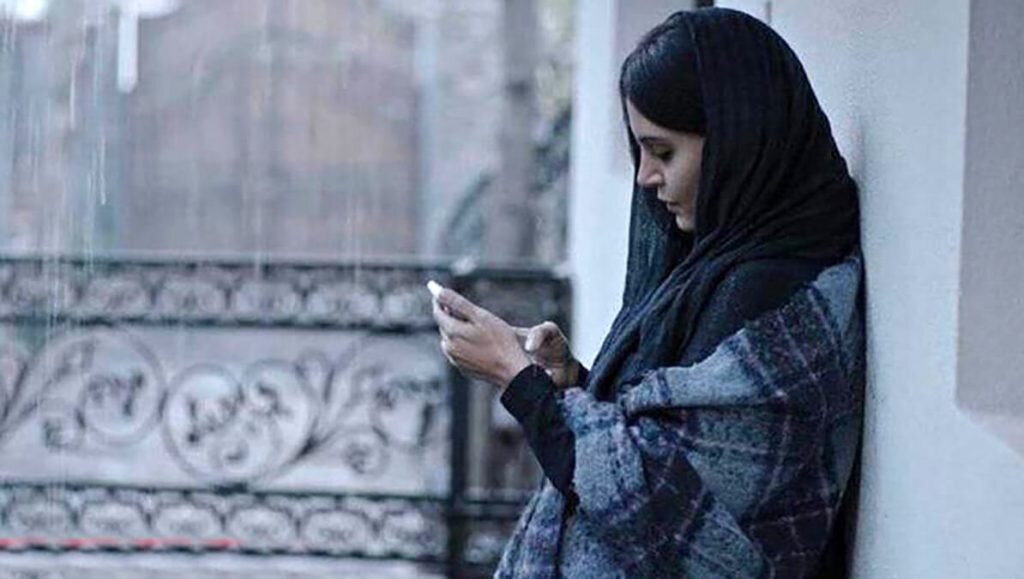

The feature film 'I Am Afraid,' directed by Behnam Behzadi, was screened on the evening of Friday, October 24, at the Cinema Museum, in the presence of a group of artists, media people, and activists in the fields of literature and the humanities.
According to Khabar Online News Agency, before the screening of the film, Behzadi, while appreciating the production crew and those present at the ceremony, spoke of the difficulties of working in Iran's independent cinema, the limitations facing this cinema, and the repetition of social issues over time, and emphasized that today's conditions are such that he no longer sees the possibility of independent filmmaking available to himself.
At the beginning of his remarks, Behzadi thanked his colleagues in the various production departments of the film, especially the behind-the-scenes crew, and said: “My colleagues worked lovingly, with great hardship and difficulty, on cold days and nights, and played an important role in the formation of this film.”
He also remembered the actors who were not present at this ceremony and, referring to artists' livelihood difficulties, said that many actors are forced to take on several jobs at the same time to cover the costs of living, and for this reason do not have the possibility of attending such programs.
Appreciation for the People of Literature and the Humanities
Another part of Behzadi's remarks was devoted to the presence of activists in the fields of literature, the humanities and interdisciplinary studies. Referring to the fact that many of these people feel that their voice and concerns are not heard by those who should pay attention to them, he said that he considers himself one of the unknown students of these fields.
This director, emphasizing the impact of what he has learned from the people of literature and the humanities in shaping his personal concerns, added: “My whole life, far more than what I have learned from cinema and art themselves, I have learned in the presence of you great people.”
At the same time, he explained that a film cannot be considered merely the direct transfer of a theme or a teaching, and said: “I am a storyteller; a film, in principle, does not move from a theme. But the concerns that accompany us in the months of making a film show themselves in the work, and many of these concerns, for me, come from things I have learned in the presence of you great ones.”
Referring to the presence of poets, writers and humanities activists at this ceremony, Behzadi said that the presence of these people is a great honor for him, and asked the audience to watch the film with this same view as well; if they liked it, they should know that he tried to do his work properly, and if they did not like it, they can consider it an exercise that was not written well.
The Repetition of Social Issues over Seven Years
Referring to the fact that “I Am Afraid” was made about seven years ago, Behzadi said that if audiences feel the film, after all these years, is still alive and effective, he will be happy; but the persistence of social issues during this time is not pleasing to him.
He explained in this regard: “If you tell me it is a film that after all these years has not grown old and is still alive and does its work, I become happy; but on the other hand I am really not happy, because in our society some issues remain in a repetitive cycle and are repeated again. Sometimes this repetition finds a bigger echo and even moves toward getting worse.”
This director, without directly entering the film's theme, expressed hope that today's society was in a better condition and that the issues that existed at the time the work was made had been resolved by today, and that the film could have been merely a narrative of the past.
Protest against the Restrictions Facing Elnaz Shakerdoost's Image
In another part of his remarks, Behnam Behzadi referred to the situation of Elnaz Shakerdoost, the film's actress, and said he would have preferred that this actress not be entangled in judicial restrictions and the obstacles which, he said, had been created for her return to Iran.
He also spoke of the problems that arose for using Shakerdoost's image in the film's advertising, and explained that during the preparation of the advertising, he had been informed that, because of the existence of a court order, it was not possible to use this actress's image.
According to Behzadi, his follow-ups have shown that the matter is not limited merely to the court order, and that institutions have also exercised their views in this area. Criticizing this situation, he said: “There is something in this country that is stronger than a court order; the order of institutions that hardly anyone knows who they are, and from above they have said that her image must not appear.”
Behzadi, noting that he had even thought about cancelling the screening of the film, said that it made no sense to him to screen a film but not be able to freely use the image of one of its actors. He finally announced reaching a minimal agreement for the use of a small image of Shakerdoost in the advertising; an agreement which, he said, was reached after various struggles.
This director emphasized that he would have preferred such an issue to have been resolved by today and for “I Am Afraid” to be screened without these restrictions.
A Warning about the Future of Iran's Independent Cinema
Another part of Behzadi's remarks was devoted to the state of independent cinema and the difficulty of continuing activity in this field. Referring to more than 20 years of his activity in cinema and his effort to make films with financial independence, he said that his goal has always been to be able to make films without intellectual indebtedness to others; but today he no longer imagines such a possibility for himself.
Stating that “I Am Afraid” is among the films made in past years that have now gained the possibility of public screening, he said: “I think this film is the last film of that tradition which in Iran we call independent cinema, and which is screened publicly. I myself, after more than 20 years of doing this work and trying to make films financially independently so as not to be intellectually indebted to anyone, today certainly cannot make films anymore.”
In this director's belief, the increase in production costs and the expansion of cinema dependent on institutions and organizations have severely limited the space for independent filmmakers to operate. He said: “Middle-of-the-road cinema, mainstream cinema, and governmental and institutional cinema have so tightened the space for all of cinema and so raised production costs that Iran's independent cinema, which one day, like Iran's carpet, was our cultural identity, is finished.”
Noting that under current conditions independent films may find a screening opportunity only on small platforms, in cinémathèques, or in the Art and Experience cinema group, Behzadi expressed concern about the limitation of public access to these works.
Criticism of the Relations Governing Screening
Behzadi then addressed the difficulties of distributing and screening independent films and said that these works face numerous obstacles even at the screening stage. Referring to his personal experience in following up supports related to the screening of “I Am Afraid,” he criticized his calls to some officials going unanswered after the screening process began.
Stating that financial and relationship-based relations in parts of cinema affect the screening opportunities of works, he said that an independent cinema which lacks the ability to compete with expensive productions enjoying organizational support does not find much of a position in such conditions.
This director, addressing the media people present at the ceremony, emphasized that he does not expect them to advertise for his film. He said: “Friends who own media and have the means, I do not want you to advertise this film. If you would like, just let people know that such a film also exists and is being shown.”
In the end, Behzadi once again thanked those present for attending the ceremony and said that his and his film's main capital is the audiences who, despite the difficulties of commuting and today's conditions, have spent time to watch the film.
Emphasizing his affection and respect for those present, he said he hopes the film can win the audience's opinion, and asked them, if they see any trace of shortcoming in it, to express their opinion honestly.
Source: Khabar Online
Comments (0)
Related stories

Tokyo Film Festival kicks off on a rainy red carpet
UNESCO Evaluator Arrives in Masuleh

No comments yet — be the first to share your view.