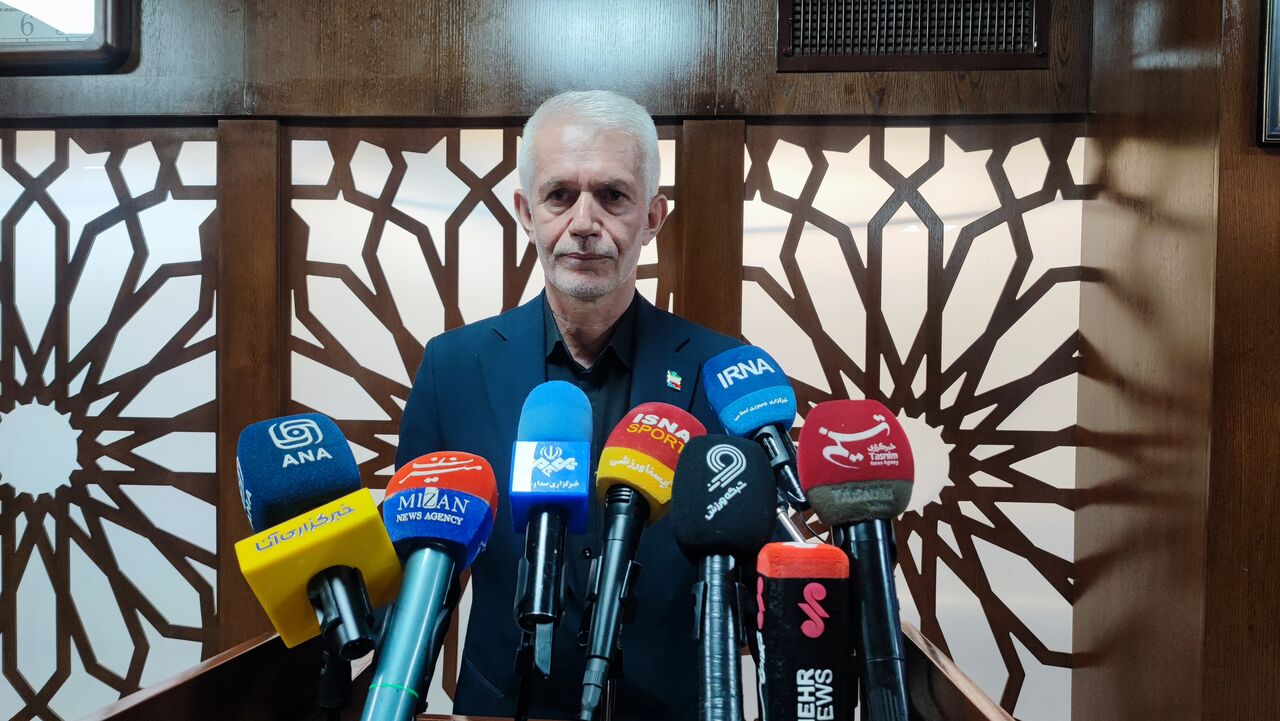
According to Varzesh 3 and Mehr News Agency, Asghar Nazari, speaking at the general and annual assembly of the Polo Federation, described the federation's programs and actions while identifying the lack of standard fields as one of the main obstacles to popularizing the sport. He stated: "With the assistance of the Minister of Sport and Youth, a suitable background has been provided for the activities of provincial boards in Tehran and Mashhad, but infrastructure development remains one of the fundamental needs of polo in the country."
Referring to the federation's training programs, he added: "Holding specialized workshops focusing on the health, welfare, and safety of sports horses and their management, alongside the national coaching and third-grade refereeing courses, has been pursued with the aim of enhancing specialized knowledge and improving the quality of polo activities. Furthermore, inviting Earl Herbert, an international instructor in this discipline, was carried out to elevate the technical level of Iranian polo."
The head of the Polo Federation cited the development of clubs in various provinces and the expansion of the sport among social, educational, and military groups as other programs of the federation, saying: "The formation of the women's national polo team is also among the measures taken along the path of developing this discipline."
Emphasizing the historical potentials of Isfahan's Naqsh-e Jahan Square for reviving polo, Nazari stated: "Naqsh-e Jahan Square holds a special place in the history of polo, and the Governor of Isfahan has also provided very good cooperation for utilizing this square in polo-related activities."
He continued: "The dimensions of an 80 by 120-meter manege have been considered for playing polo in Naqsh-e Jahan Square, and if this square returns to its original usage, hosting the Polo World Cup in this historical complex can be pursued for the first time."
Referring to the measures taken to introduce the cultural potentials of this discipline on the international stage, the head of the Polo Federation said: "Holding the Iranian Culture Night centered around polo with the presence of the Minister of Sport and Youth, ambassadors, and attachés from over 30 countries was among the programs implemented to introduce this cultural and sports heritage."
He added: "Additionally, the 'National Sport, National Accord' program was held with the presence of ambassadors and military attachés with a sports diplomacy approach to utilize polo's potential for strengthening cultural and sports interactions."
Pointing to the revival of polo in regions with a historical background in the sport, Nazari asserted: "After about 300 years, the national polo tradition was held in Noor County, Mazandaran Province. Mazandaran, possessing a history of over a thousand years in polo, has significant potential for developing this discipline, and it is expected that this province will play a more prominent role in the federation's future programs."
He continued: "In Talesh, Gilan Province, indigenous polo focusing on the Caspian horse has also been revived, and about 40 polo players are active in this region. Signing a memorandum of understanding with the Caspian Horse Association was also done with the aim of strengthening cooperation and developing the bond between this valuable breed and polo."
The head of the Polo Federation listed honoring veterans and paying attention to the cultural traditions of this discipline in official competitions as other axes of the federation's activities. Regarding the designation of a National Polo Day, he said: "The proposal to designate November 18 as National Polo Day, given this date's connection to the revival of Naqsh-e Jahan Square, is under review and finalization in the Supreme Council of the Cultural Revolution, and we hope this process will yield results next year."
In another part of his remarks, Nazari pointed to the national team's programs, stating: "The Iranian national polo team will soon be dispatched to participate in the World Cup qualifiers in Nigeria, and we hope our country's national players will experience advancing to the World Cup just like last year."
He also stated regarding the standing of Iranian women's polo: "The Iranian women's national polo team possesses the potential to be placed among the top eight teams in the world, and the development of this sector of the country's polo is being pursued seriously."
Expressing gratitude for the support of the Minister of Sport and Youth, the head of the Polo Federation stated: "I am grateful to Donyamali for his good support of this heritage sport. The continuation of this support can provide the ground for infrastructure development, the expansion of provincial activities, and the enhancement of Iranian polo's standing on the international stage."
Source: Varzesh 3


No comments yet — be the first to share your view.