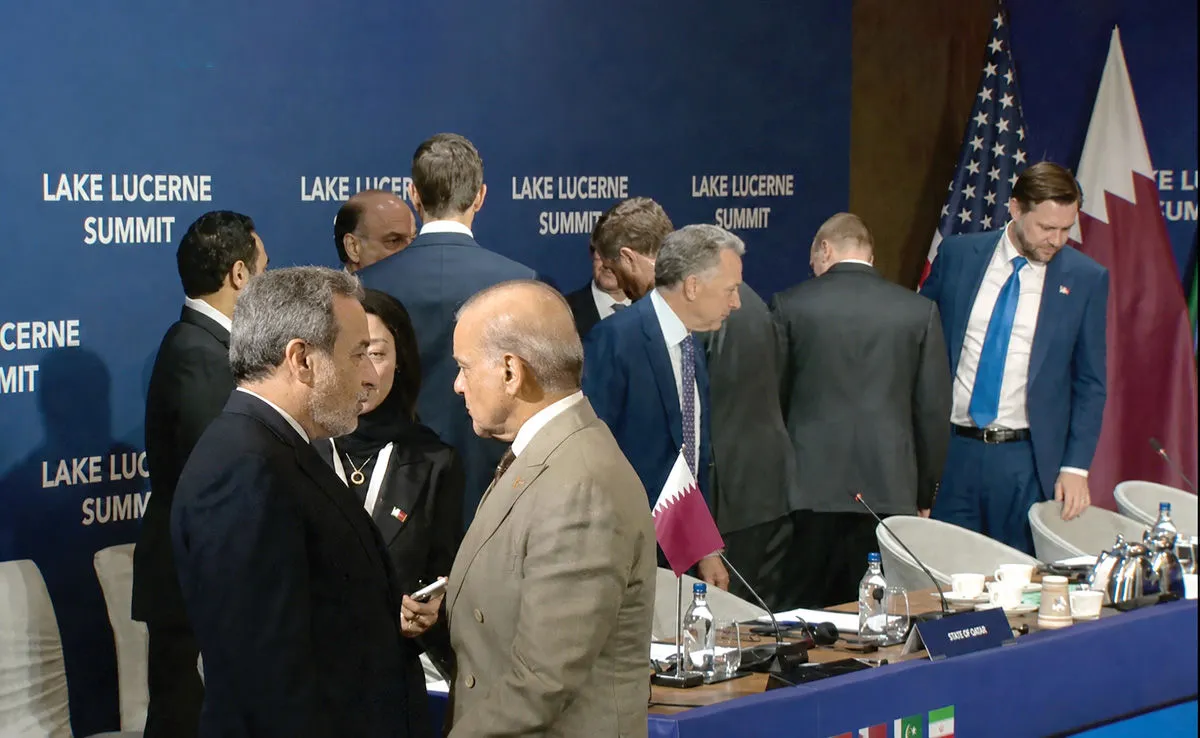
IRNA: Announcing Tehran's readiness to resume negotiations with the US through Islamabad's mediation, the Iranian ambassador to Pakistan emphasized that the reopening of the Strait of Hormuz is contingent upon Washington lifting the naval blockade of Iranian ports. Reza Amiri Moghaddam also announced the continuation of Pakistan's mediating role in resolving the conflict and reviewing the joint Mecca defense agreement.
Speaking at a seminar in Islamabad titled "The US, Zionist Regime and Iran War and Emerging Regional Alliances; More Crisis or Hope for Diplomacy?", Amiri Moghaddam stated that Tehran is prepared to resume talks with the US within the framework of a peace agreement mediated by Pakistan, but the continuation of the naval blockade has created obstacles for the diplomatic process. He noted that during the visits of Field Marshal Syed Asim Munir, commander of the army and chairman of the Joint Chiefs of Staff Committee of Pakistan, to Iran, Tehran declared its readiness to reopen the Strait of Hormuz, provided that the US lifts the naval blockade of Iranian ports.
Accusing Washington of undermining diplomacy and prolonging the deadlock over the Strait of Hormuz, Amiri Moghaddam stressed the continuation of Islamabad's mediating role, asserting: "Islamabad's memorandum of understanding remains valid, and Pakistan continues to play its pivotal role in resolving the conflict."
The Iranian ambassador to Pakistan also stated: "Despite external pressures and sanctions, the Islamic Republic of Iran remains committed to pursuing its independent policies."
Regarding the joint Mecca defense agreement between Pakistan, Saudi Arabia, and Turkey, he said that Tehran will examine the provisions of this agreement before taking a final stance.
Noting that "we are reviewing the Mecca agreement and if it is beneficial, we will support it," Reza Amiri Moghaddam added that this agreement will serve as a potential capacity to strengthen unity.
He described the Palestinian issue and Iran's opposition to the policies of the Zionist regime as major factors shaping current regional confrontations.
During the seminar, several former political, military, and diplomatic officials of Pakistan shared their perspectives on the consequences of the war and the challenges facing Islamabad's foreign policy.
Ashraf Jehangir Qazi, former Pakistani ambassador, pointed to the potential diplomatic challenges his country might face if Iran joins the joint Mecca defense agreement.
Inam ul-Haq, former Pakistani foreign minister, also called for a balanced foreign policy, strengthening domestic capabilities, and carefully assessing Pakistan's strategic commitments in light of its economic constraints and security challenges.
He emphasized the importance of Pakistan's relations with China and called for a revision in Islamabad's approach to relations with the US, commensurate with the shifting alignment of international relations.
Source: Entekhab

No comments yet — be the first to share your view.