Employment facilities must lead to the economic independence of beneficiaries
A modern news platform — accurate, fast and unbiased reporting
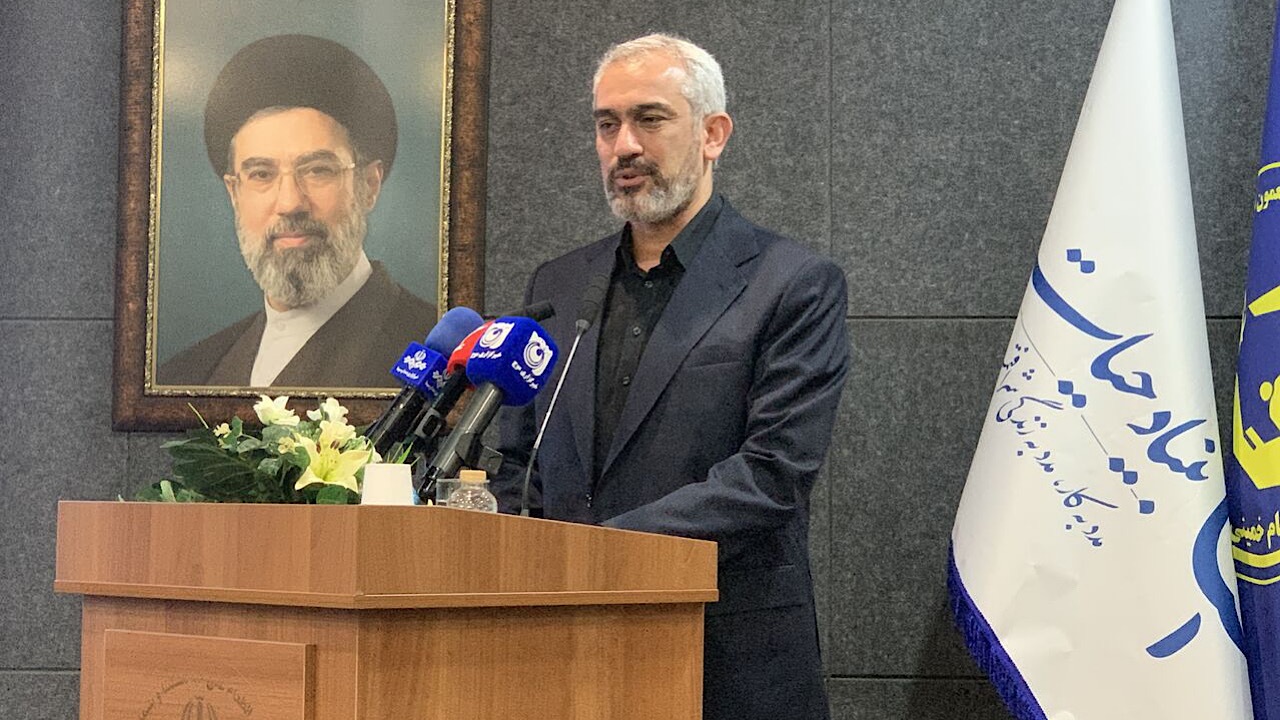
Young Journalists Club - Speaking on Tuesday at the fourth Employment Helpers Conference, referring to the economic empowerment programs of the Imam Khomeini Relief Foundation, Seyed Ali Madanizadeh stated that breaking the cycle of poverty must be one of the main priorities of support institutions, and in this path, paying attention to children and adolescents is of special importance.
He added that one of the existing risks in low-income families is the continuation of the cycle of poverty in subsequent generations; therefore, the empowerment of children and adolescents must be pursued with a focus on basic skills training and problem-solving abilities so that in their youth they can manage their lives and economic activities without relying on continuous support.
Emphasizing the ministry's support for empowerment programs, the Minister of Economy pointed to the necessity of developing micro-job consulting and mentoring, and said that alongside financing and connecting jobs to production chains, conditions must be provided for effective communication between micro-producers and the consumer market.
Stating that market access is one of the main problems of home-based and micro-jobs, Madanizadeh continued that specialized companies can create joint demand by aggregating the capacity of these jobs and establish a connection between producers and the target market, including large industries and consumers.
Referring to the role of the banking network in developing this model, he added that banks can help aggregate demands and direct facilities toward activities that have a clear market and growth capacity by creating or supporting coaching and consulting companies.
The Minister of Economy considered low productivity as one of the obstacles to the sustainability of micro-jobs and said that if facilities are provided to activities that do not have the necessary efficiency, financial resources will not achieve the desired outcome, and the possibility of continued financing will also decrease; therefore, one must focus on jobs that have the capacity for increased productivity and economic justification.
Madanizadeh emphasized that supported economic activities must be designed with a development perspective from the beginning. Initial support can start with small loans, but business expansion requires a sustainable economic activity equipped with a market.
Referring to the goal of removing beneficiaries from the Relief Foundation's support cycle after 18 months, he stated that facilities must be paid in a continuous path and in coordination with banks so that businesses reach an income after this period that ensures individuals' economic independence and provides economic justification for banks to continue financing them.
The Minister of Economy also emphasized the necessity of paying attention to jobs related to digital transformation and said that the development of information technology skills can provide the ground for individuals covered by support institutions to enter broader labor markets, because some of these activities are achievable with limited initial capital and specialized training.
Madanizadeh added that activities such as teleworking and freelancing in the field of information technology, provided they have appropriate training and sufficient skills, can create suitable income opportunities and help individuals' economic independence in a shorter period.
Referring to the banking network's capacity to utilize services and skills acquired by beneficiaries, he called for greater attention to these areas in employment-generating programs and emphasized the Ministry of Economy's support for effective plans in economic empowerment and sustainable job creation.
Pointing to the capacity for developing solar power plants in the Relief Foundation's employment-generating programs, Madanizadeh said that these projects can help supply part of the country's energy needs in addition to creating sustainable income for covered families.
Expressing gratitude to the operating banks that have taken the initiative in implementing employment-generating programs, he called for the expansion of the banking network's cooperation with the Relief Foundation and added that support for profitable economic activities with a clear market must be developed so that loan resources lead to the creation of sustainable jobs.
The Minister of Economy also emphasized the necessity of using the banking network's capacity to attract public participation and secure financial resources for empowerment projects, stating that by properly introducing these projects and gaining public trust, more resources can be attracted to implement employment-generating programs and support low-income strata.
Madanizadeh described the development of the credit-scoring system and the strengthening of the guarantee fund as other areas of banking network cooperation and emphasized the necessity of facilitating applicants' access to financial resources.
He also proposed that specialized companies in the fields of consulting, marketing, demand aggregation, and connecting micro-jobs to production chains be developed so that businesses under the umbrella of support institutions have a clear path for growth and market access.
Emphasizing the necessity of synergy among executive bodies and the banking network to reduce poverty, the Minister of Economic Affairs and Finance stated that the Relief Foundation has significant capacity to help eradicate absolute poverty in the country, and by strengthening empowerment programs, the groundwork must be provided to secure minimum livelihoods and the economic independence of needy households.
Source: IRNA
Source: Young Journalists Club


No comments yet — be the first to share your view.