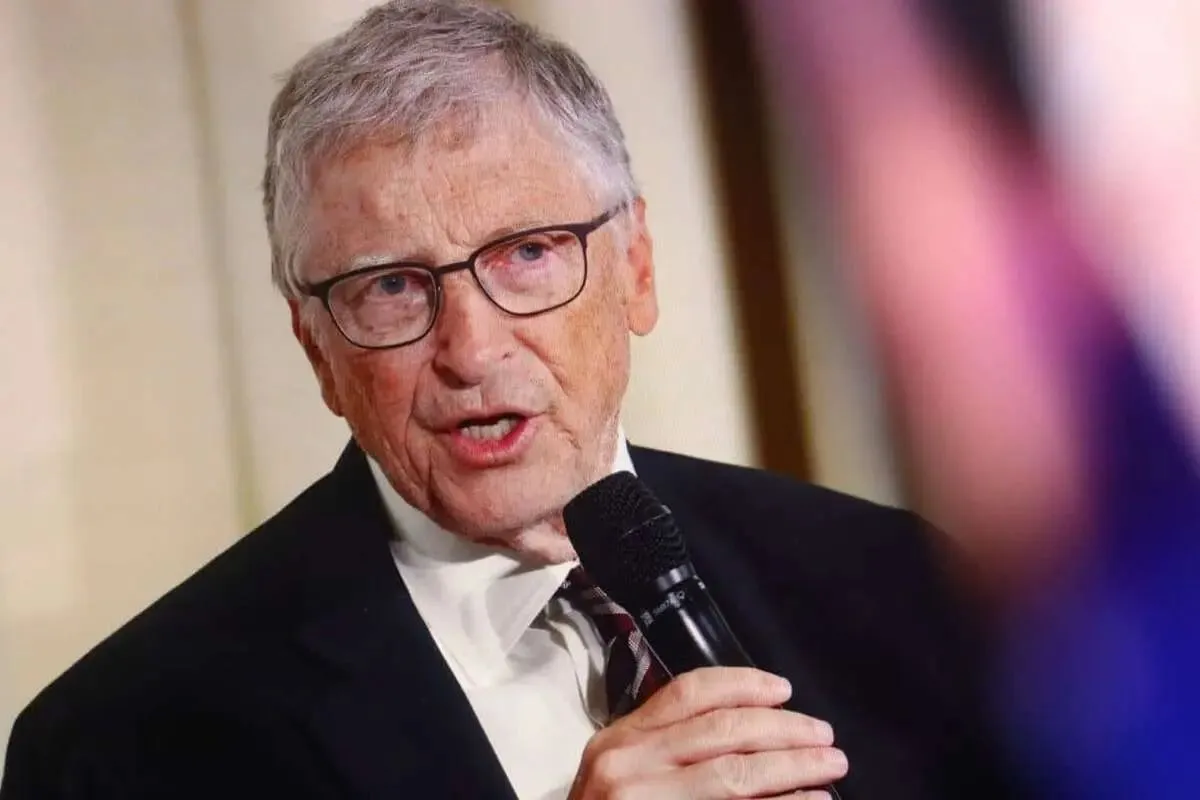
Business Insider wrote: Bill Gates says AI will ultimately lead to the creation of "true abundance", but two decades before reaching that stage, the world will experience a period that, he says, will be "as turbulent as the most turbulent periods in human history".
According to Entekhab, the report continues: The Microsoft founder and billionaire philanthropist said in the latest episode of the "Decoder" podcast: "My big concern is this 20-year transition period; a period in which there will be winners and losers and a lot of disruption will occur."
Referring to widespread concerns about the future of office and professional jobs, Gates said jobs such as telemarketing, telephone support and accounting will disappear, because AI will be able to do these jobs "at a far lower cost, at a much greater speed and even with higher accuracy".
On manual jobs, he also said humanoid robots will gradually replace human labor.
Gates stated: "If we do not decide to sharply slow down this process or stop it, we will ultimately have robots that can build houses, produce food and perform surgery. In that case, to produce more goods and provide more services, there will no longer be any need for any of the work that human labor does for the economy."
He also emphasized how jarring such a transformation can be for someone like himself; someone whose vast financial resources have enabled him to be a pioneer in efforts to eradicate malaria and confront other humanitarian crises.
Gates said: "When AI tells me: no, I'm better than you; go play pickleball, I'll let you know later; I'll handle this myself — I mean, that statement is funny to a degree, but it's not actually funny."
Gates once again emphasized a view he has long defended: working is important for creating a sense of purpose in people's lives. Work allows people to earn an income, have a reason to get up every day, connect with their colleagues, build and create, and solve problems.
He suggested that in the future, some activities such as art, sports, cooking and childcare may be assigned to domains where humans still play the main role; "even if AI could do these things better."
Gates also pointed to measures such as early retirement and capping working hours, which can help maintain a level of human employment.
He imagined that some people might say: "Let us live like the Amish and use AI only in some areas"; so that they do not have to give up "helping one another or creating unique ideas".
The Amish are a religious group in North America, many of whose communities limit the use of modern technologies.
Jeff Bezos, the founder of Amazon, and Jamie Dimon, the CEO of JPMorgan, have both also proposed shorter working weeks as a socially less costly alternative to unemployment caused by the spread of AI.
Gates is one of several prominent tech industry figures who have warned about disruption in the labor market on the path to the age of abundance.
Elon Musk has predicted that this transition period will be "turbulent" and has considered government payments to all citizens the best solution to counter job losses caused by AI.
He has said technology will reduce production costs so much that everyone will be able to have "whatever they want", working will become "optional", and over the next 10 to 20 years, saving for retirement will not be worth much, because money will lose its importance.
Similarly, Dario Amodei, the CEO of Anthropic, has said AI promises "improving the quality of life for everyone", but "its short-term shock will be unprecedented in scale".
However, Sam Altman, the CEO of OpenAI, said in May that AI has so far not eliminated office and professional jobs as much as he had expected, and he no longer predicts a "job apocalypse".
Despite widespread concerns about AI replacing corporate jobs and mass layoffs at large companies such as Amazon and Meta, the national unemployment rate has not risen significantly during the AI boom period.
Source: Entekhab